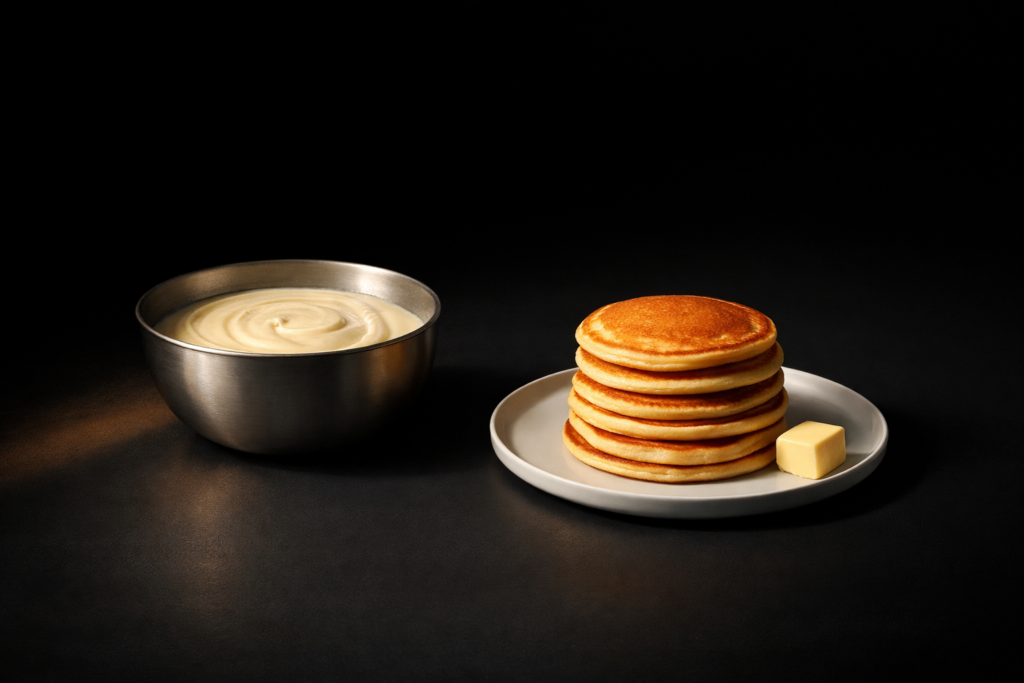
Making pancakes from scratch is simple once you know the basic batter and a few small techniques. You only need flour, a leavening agent, milk, eggs, fat, and a hot pan to make pancakes that are tender inside, lightly golden outside, and far better than most boxed mixes.
This guide walks you through the ingredients, the method, and the details that make the difference between flat, rubbery pancakes and soft, fluffy ones. If you can stir a bowl and watch a skillet, you can make a very good batch at home.
What you need for pancakes from scratch
This is a classic pancake formula that works for breakfast, brunch, or a simple snack. It makes about 8 to 10 medium pancakes, depending on the size.
Ingredients
- 200 g (about 1 2/3 cups) all-purpose flour
- 2 tablespoons sugar
- 2 teaspoons baking powder
- 1/2 teaspoon fine salt
- 300 ml (1 1/4 cups) milk
- 2 large eggs
- 30 g (2 tablespoons) unsalted butter, melted, or 30 ml (2 tablespoons) neutral oil
- 5 ml (1 teaspoon) vanilla extract, optional
- A little extra butter or oil for the pan
If your baking powder has been open a long time, it may be weaker. Fresh leavening gives better lift.
Equipment
- 1 large mixing bowl
- 1 medium bowl or measuring jug
- Whisk or fork
- Nonstick skillet, well-seasoned frying pan, or griddle
- Spatula
- Measuring cups or a kitchen scale
A heavy pan is helpful because it holds heat more evenly. Uneven heat often causes pancakes to brown too fast before the centers cook through.
How the batter works
Pancake batter is simple, but each ingredient has a job.
- Flour gives structure.
- Baking powder creates bubbles and lift.
- Sugar adds a little sweetness and helps browning.
- Salt sharpens flavor.
- Milk provides moisture and helps the batter spread.
- Eggs add structure, richness, and color.
- Butter or oil keeps the crumb tender.
The key is not to overmix. When flour meets liquid, gluten begins to form. A little gluten is useful, but too much makes pancakes tough and springy instead of soft.
How to make pancakes from scratch step by step
- Mix the dry ingredients. In a large bowl, whisk together the flour, sugar, baking powder, and salt until evenly combined.
- Mix the wet ingredients. In a second bowl or jug, whisk the milk, eggs, melted butter or oil, and vanilla if using.
- Combine gently. Pour the wet mixture into the dry ingredients. Stir with a whisk or fork just until no dry pockets remain. A few small lumps are fine. Do not beat until smooth.
- Rest the batter. Leave the batter to stand for 5 to 10 minutes. This gives the flour time to hydrate and can help produce a more even texture.
- Heat the pan. Put a skillet or griddle over medium heat. Add a very thin film of butter or oil. If the pan smokes, it is too hot. Reduce the heat and let it settle.
- Cook the first side. Pour about 60 ml (1/4 cup) batter per pancake into the pan, leaving room between each one. Cook until bubbles appear on the surface and the edges look slightly set, usually 2 to 3 minutes.
- Flip once. Slide a spatula underneath and turn each pancake over in one confident motion. Cook the second side for about 1 to 2 minutes, until golden and cooked through.
- Keep warm if needed. Transfer cooked pancakes to a plate or a tray in a low oven at about 95°C (200°F) while you finish the batch.
- Serve. Eat right away with your preferred toppings.
Take care with hot pans, splattering fat, and steam. Keep pan handles turned inward where possible, especially if children are nearby.
Tips for fluffy, tender pancakes
Good pancakes are less about complicated ingredients and more about a few small habits.
Do not overmix
This is the most important rule. Slightly lumpy batter is better than perfectly smooth batter. Overmixed batter often leads to dense, chewy pancakes.
Use medium heat
High heat can burn the outside before the middle sets. Medium heat gives you more control and more even color.
Flip only when ready
Wait until you see bubbles on the surface and the edges begin to look dry. If you flip too early, the batter may spread or tear.
Do not press the pancakes
Pressing down with the spatula squeezes out air and can make the texture heavier.
Grease the pan lightly
Too much fat can fry the surface unevenly. A thin coating is enough.
Rest the batter briefly
Even 5 minutes can improve the texture. If the batter thickens too much as it rests, stir in a small splash of milk.
Common pancake problems and how to fix them
Pancakes are tough
The batter was probably overmixed. Next time, stir only until combined.
Pancakes are flat
Your baking powder may be old, or the batter may be too thin. Check the leavening and use slightly less liquid if needed.
Pancakes are raw in the middle
The pan is likely too hot, or the pancakes are too thick and large. Lower the heat and use a little less batter per pancake.
Pancakes burn before they cook through
Again, the heat is too high. Let the pan cool slightly, wipe away any darkened butter, and continue over lower heat.
Pancakes are pale
The pan may not be hot enough, or the batter may contain very little sugar. Increase the heat slightly once the pan is stable.
Batter is too thick
Add milk 1 tablespoon at a time until it loosens to a pourable consistency.
Batter is too thin
Sprinkle in a little extra flour, 1 tablespoon at a time, and stir gently.
Easy variations
Once you know the basic method, you can adjust the flavor without changing the process much.
Buttermilk pancakes
Replace the milk with 300 ml (1 1/4 cups) buttermilk. Because buttermilk is acidic, many cooks reduce the baking powder slightly and add a small amount of baking soda, such as 1 teaspoon baking powder plus 1/2 teaspoon baking soda. This helps with lift and browning.
Whole wheat pancakes
Replace up to half of the all-purpose flour with whole wheat flour. You may need a little extra milk because whole grain flour absorbs more liquid.
Banana pancakes
Mash 1 ripe banana and whisk it into the wet ingredients. The pancakes will be sweeter and softer, so keep the heat moderate.
Blueberry pancakes
Scatter fresh or frozen blueberries onto each pancake after the batter is in the pan rather than stirring them all into the bowl. This helps keep the batter from turning purple and makes distribution more even.
Cinnamon pancakes
Add 1/2 teaspoon ground cinnamon to the dry ingredients for a warmer flavor.
Dairy-free pancakes
Use a plant-based milk and oil instead of butter. Different plant milks vary in thickness and sweetness, so you may need to adjust slightly.
Serving ideas
Pancakes are flexible enough to be simple or more substantial.
- Butter and maple syrup
- Honey or fruit syrup
- Fresh berries or sliced banana
- Yogurt and chopped nuts
- Lemon juice and a light dusting of sugar
- Stewed fruit or fruit compote
- Crisp bacon or sausages, where preferred
If you are serving guests, place toppings on the table and let everyone build their own plate. That keeps the pancakes warm and avoids sogginess.
Storage and reheating
Pancakes keep well, which makes them useful for busy mornings.
To refrigerate
Cool completely, then store in an airtight container for up to 3 days. Separate layers with parchment if you have it.
To freeze
Freeze in a single layer first or separate each pancake so they do not stick together. Store in a sealed container or freezer bag for up to 2 months.
To reheat
- Toaster: Good for small batches and a lightly crisp edge.
- Oven: Warm on a tray at 160°C (325°F) until heated through.
- Skillet: Reheat over low heat for a soft texture.
- Microwave: Quick, but the pancakes can become softer and less fresh-tasting.
Reheat until hot all the way through. As with any cooked egg-and-milk food, chill leftovers promptly and do not leave them at room temperature for long periods.
Can you make the batter ahead?
You can, but fresh batter usually gives the best rise because the leavening begins working once the wet and dry ingredients meet. If you want to get ahead, a better option is to mix the dry ingredients in advance and the wet ingredients separately, then combine them just before cooking.
If you do refrigerate mixed batter overnight, expect slightly less lift. Stir it gently before use, and add a little milk if it has thickened too much.
Frequently asked questions
Why are my pancakes not fluffy?
The usual causes are overmixing, old baking powder, or a pan that is too hot. Mix gently, use fresh leavening, and cook over medium heat.
Can I make pancakes from scratch without eggs?
Yes. The texture will change, but you can use an egg substitute such as a flax mixture or a commercial replacer if that suits your needs. Different substitutes behave differently, so check the product or method guidance.
Should pancake batter be thick or thin?
It should be pourable but not watery. A spoonful should fall in a thick ribbon. If it barely spreads, add a little milk. If it runs too quickly, add a little flour.
What is the best pan for pancakes?
A nonstick skillet, flat griddle, or well-seasoned pan with even heat works best. Heavy pans are often easier to control.
Can I use self-rising flour?
Yes, but adjust carefully because it already contains leavening and often salt. Omit or reduce the baking powder and salt so the pancakes do not taste harsh or rise unevenly.
Conclusion
Once you learn the basic method, making pancakes from scratch becomes a quick kitchen habit rather than a project. Measure carefully, mix gently, use medium heat, and flip only when the surface tells you it is ready. With that foundation, you can keep them classic or adapt them to whatever ingredients and flavors you like.