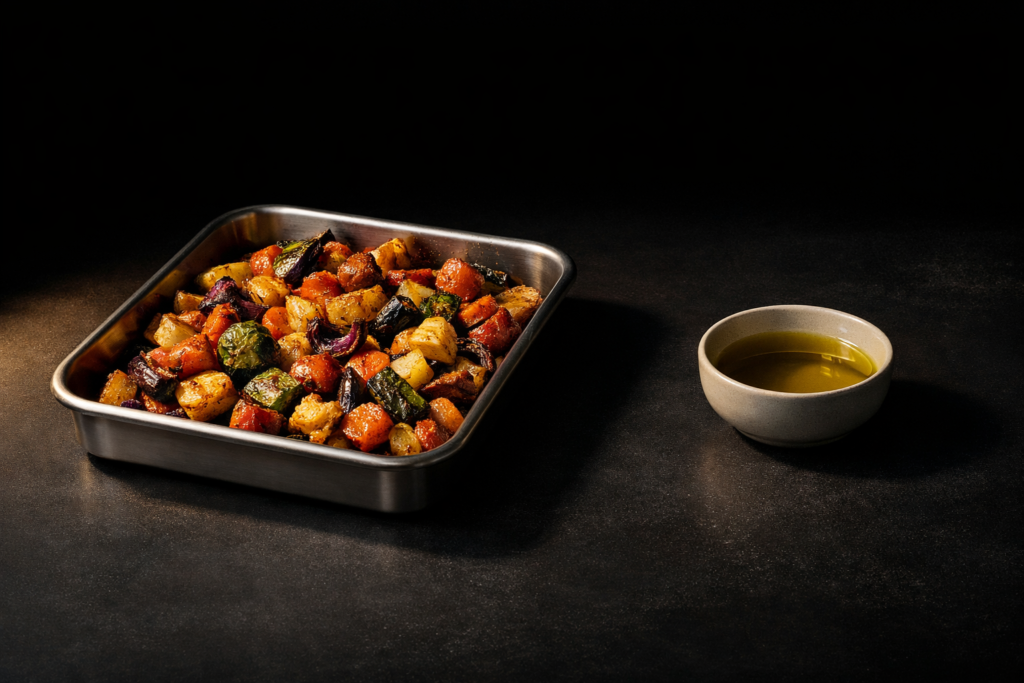
A reliable roasted vegetables recipe comes down to a few key things: high enough heat, enough space on the tray, a light coating of oil, and vegetables cut to roast at a similar rate. Get those right and you will have vegetables that are browned at the edges, tender in the middle, and full of concentrated flavor.
Roasting is one of the easiest ways to make vegetables taste richer and sweeter without much effort. It works for quick weeknight sides, meal prep, warm salads, grain bowls, soups, and pasta. Once you understand the method, you can adapt it to almost any vegetable you have.
Why roasting works so well
Roasting uses dry heat to drive off moisture from the surface of the vegetables. As water evaporates, the outside can brown and caramelize. That browning adds deep, savory flavor and a slightly crisp texture, while the inside softens and becomes sweet.
This is why roasted vegetables taste very different from boiled or steamed ones. They are less watery, more concentrated, and often more satisfying with just a little salt, oil, and heat.
What you need for a roasted vegetables recipe
You do not need special equipment, but the right basics help.
- A sturdy baking tray or roasting pan: A large, shallow metal tray encourages browning better than a deep dish.
- An oven: Conventional or fan-assisted both work. Fan ovens often brown a little faster, so check a bit earlier.
- A sharp knife and cutting board: Cut carefully and keep fingers tucked away from the blade.
- Oil: Use a neutral oil or olive oil. You only need enough to lightly coat the vegetables.
- Salt and pepper: Start simple, then build flavor with spices, herbs, citrus, or sauces.
Safety note: Oven trays, oven racks, and hot oil can cause burns. Use dry oven mitts or thick dry cloths, and open the oven carefully to avoid a rush of hot steam. If using a gas oven, follow the manufacturer’s instructions and local safety guidance.
Best vegetables for roasting
Many vegetables roast well, but they do not all cook at the same speed. It helps to group them by density and moisture level.
Fast-roasting vegetables
- Zucchini or courgette
- Bell peppers
- Asparagus
- Broccoli
- Cauliflower florets
- Eggplant or aubergine
- Mushrooms
- Onions
- Cherry tomatoes
These usually roast in about 15 to 25 minutes, depending on size and oven temperature.
Medium to slow-roasting vegetables
- Carrots
- Parsnips
- Sweet potatoes
- Potatoes
- Beets or beetroot
- Turnips
- Brussels sprouts
- Butternut squash and other firm squash
These often need 25 to 45 minutes.
Vegetables that need special handling
- Leafy greens: Kale can crisp quickly, but spinach is usually better sautéed than roasted.
- Frozen vegetables: These can work, but they release more moisture. Roast straight from frozen at high heat and expect a softer result.
- Very watery vegetables: Tomatoes and mushrooms are delicious roasted, but they can steam if crowded.
How to cut vegetables for even roasting
Even size matters more than perfect shape. If pieces are similar in size, they will cook more evenly.
- Dense vegetables: Cut smaller, around 2 to 3 cm (about 3/4 to 1 1/4 inches).
- Tender vegetables: Cut a little larger so they do not overcook before browning.
- Long vegetables: Keep shapes practical. Carrots can be sliced into batons or coins; broccoli can be cut into bite-size florets with a bit of stem attached.
If you are mixing vegetables with different cooking times, either cut dense vegetables smaller or start them first and add the quicker vegetables later.
How much oil and seasoning to use
You want enough oil to coat the vegetables lightly, not drown them. Too little oil can lead to dry, patchy roasting. Too much can make them greasy and stop good browning.
A good starting point is 1 to 2 tablespoons of oil for a large tray of vegetables, around 700 g to 1 kg (about 1 1/2 to 2 1/4 lb). Toss until the pieces look lightly glossy.
Basic seasoning
- Fine or flaky salt
- Black pepper
- Oil
That alone can be enough.
Other good flavor options
- Garlic cloves, added whole or in thick slices
- Rosemary, thyme, oregano, or sage
- Ground cumin, coriander, paprika, or chili flakes
- Lemon zest or orange zest after roasting
- A splash of vinegar or lemon juice after roasting
- Parmesan-style hard cheese or crumbled feta, added at the end if you eat dairy
Allergen note: If serving others, check for allergies or dietary needs, especially with dairy, sesame, nuts, or spice blends that may contain mustard or celery depending on the region.
Step-by-step roasted vegetables recipe
Use this method as your base. It works for mixed vegetables or a single type.
- Heat the oven. Preheat to 220°C (425°F), or 200°C (400°F) for a fan oven if it runs hot. A fully heated oven helps the vegetables start browning quickly.
- Prepare the tray. Use a large metal tray. If you like, line it with baking paper or parchment for easier cleanup, though direct contact with the tray can give slightly better browning.
- Wash and dry the vegetables. Clean off dirt well, especially from root vegetables. Dry them thoroughly. Wet vegetables steam instead of roast.
- Cut into even pieces. Aim for similar sizes. Cut dense vegetables smaller than tender ones if roasting together.
- Season lightly. Put the vegetables in a bowl or directly on the tray. Add 1 to 2 tablespoons oil, salt, and pepper. Toss well to coat lightly and evenly.
- Spread in a single layer. This is one of the most important steps. Leave a little space between pieces. If they are piled up or tightly packed, they will steam.
- Roast without fussing too early. Put the tray in the hot oven. Let the vegetables roast undisturbed for the first 10 to 15 minutes so they can color properly.
- Turn and continue roasting. Use a spatula or tongs to turn the pieces. Roast until browned and tender. Total time may be 20 minutes for tender vegetables or up to 45 minutes for dense ones.
- Check for doneness. The edges should be browned and the centers should be easy to pierce with a knife. Potatoes and root vegetables should feel creamy inside, not chalky.
- Finish and serve. Taste and adjust seasoning. Add fresh herbs, citrus, cheese, yogurt, or a sauce if you like.
Roasting times for common vegetables
These are useful guides, not fixed rules. Oven performance, tray size, and cut size all affect timing.
- Broccoli: 15 to 20 minutes
- Cauliflower: 20 to 30 minutes
- Zucchini or courgette: 15 to 20 minutes
- Bell peppers: 20 to 25 minutes
- Onions: 25 to 35 minutes
- Brussels sprouts: 20 to 30 minutes
- Carrots: 25 to 35 minutes
- Sweet potatoes: 25 to 35 minutes
- Potatoes: 30 to 45 minutes
- Butternut squash: 25 to 35 minutes
- Beets or beetroot: 35 to 50 minutes
If you are roasting mixed vegetables, combine ones with similar cooking times or stagger them. For example, start carrots first, then add broccoli later.
How to build a balanced tray of mixed vegetables
If you want one tray with variety, choose a mix of textures and colors, but be realistic about timing.
A simple reliable mix
- Carrots
- Red onion
- Bell pepper
- Zucchini or courgette
- Cauliflower
Cut the carrots smaller than the zucchini, and check the tray at the 20-minute mark.
A more autumnal mix
- Sweet potato
- Butternut squash
- Red onion
- Brussels sprouts
This combination roasts at a fairly similar pace and becomes sweet and deeply browned.
For extra crispness
Use two trays instead of one crowded tray. This is especially helpful if cooking for a family or meal prepping several portions.
Common mistakes and how to fix them
The vegetables are pale and soft
The oven may be too cool, the tray may be crowded, or the vegetables may be too wet. Next time, dry them well, use a larger tray, and roast at a higher temperature.
The vegetables burned before they became tender
The pieces may be too small, or you may be roasting sugary vegetables too hot. Lower the oven slightly or cut larger pieces. You can also cover the tray loosely for part of the cooking time, then uncover to finish browning.
The vegetables taste bland
Use enough salt, and season after roasting too. A final squeeze of lemon, a spoonful of yogurt, chopped herbs, or a little vinegar can make the flavors much brighter.
The vegetables stuck to the tray
Use a little more oil, preheat the tray, or line it with parchment. Also let the vegetables roast long enough before trying to turn them; they often release more easily after browning.
Easy flavor variations
Classic herb
Use olive oil, salt, pepper, rosemary, and thyme. Finish with lemon zest.
Warm spice
Toss with oil, salt, cumin, coriander, and paprika. Serve with plain yogurt or tahini sauce if you like.
Garlic and chili
Roast with sliced garlic and chili flakes, then finish with parsley and lemon juice.
Sweet and savory
Roast carrots, squash, or sweet potatoes with olive oil, salt, and black pepper, then add a small drizzle of honey or maple syrup near the end if you want a glazed finish. Use care, as sugars can burn quickly.
How to serve roasted vegetables
Roasted vegetables fit into many meals.
- As a side for grilled, roasted, or baked proteins
- Tossed into cooked grains like rice, quinoa, or couscous
- Folded into pasta with olive oil and cheese
- Added to salads with leafy greens and a sharp dressing
- Blended into soups or stirred into stews
- Layered in wraps, sandwiches, or grain bowls
They are also good at room temperature, which makes them useful for packed lunches and make-ahead meals.
Storage and reheating
Let roasted vegetables cool before storing. Refrigerate them in a covered container and use within a few days. Local food safety advice can vary slightly, so follow trusted guidance where you live.
To reheat, spread them on a tray and warm in a hot oven so they regain some browning. A skillet also works well. Microwaving is convenient, but it often softens them.
Food safety note: Do not leave cooked vegetables at room temperature for extended periods, especially if they have been mixed with cheese, yogurt, or other perishable toppings.
Frequently asked questions
Should I cover vegetables when roasting?
Usually no. Roasting works best with dry heat and exposure to the hot oven air. Covering traps steam and reduces browning. The exception is very dense vegetables that are browning too fast before softening.
Is it better to roast vegetables on parchment or directly on the tray?
Directly on the tray often gives slightly better browning. Parchment makes cleanup easier and can help with sticking. Both methods work.
Can I roast vegetables without oil?
You can, but the results are usually less evenly browned and less flavorful. A small amount of oil helps heat transfer and improves texture. If you want to use less, coat very lightly rather than skipping it entirely.
Why are my roasted vegetables soggy?
They are usually too crowded, too wet, or cooked at too low a temperature. Spread them out, dry them well, and make sure the oven is fully preheated.
Can I prepare roasted vegetables ahead of time?
Yes. You can cut and refrigerate many vegetables in advance, then season and roast later. You can also roast them ahead and reheat in the oven before serving.
Good roasted vegetables are not about a strict formula so much as a dependable method. Use high heat, keep the tray uncrowded, cut thoughtfully, and season well. Once you have that foundation, you can turn almost any mix of vegetables into a simple, flavorful dish.