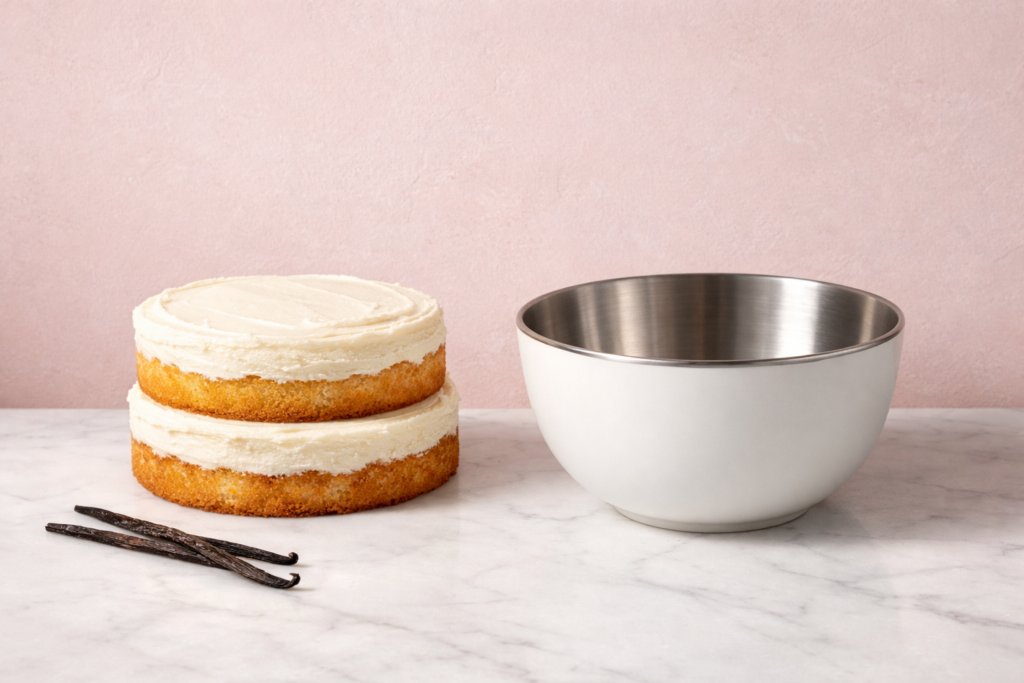
A good vanilla cake recipe should give you a cake that is light, tender, and deeply buttery with a clean vanilla flavor. The method matters as much as the ingredients: use room-temperature dairy and eggs, measure carefully, and avoid overmixing once the flour goes in.
This guide walks you through a classic two-layer vanilla cake, with the reasons behind each step so you can bake it with confidence. Whether you want a simple celebration cake or a dependable base for fruit, buttercream, or sprinkles, this is a reliable place to start.
What makes a classic vanilla cake so good?
Classic vanilla cake is simple, which means every detail shows. The crumb should be soft but not fragile, the flavor rich but not heavy, and the surface evenly golden rather than dark and dry.
That balance comes from a few basic baking principles:
- Butter adds flavor and helps create a fine crumb when creamed with sugar.
- Sugar sweetens, but it also helps retain moisture and encourages a lighter texture.
- Eggs provide structure, richness, and stability.
- Flour builds the cake’s framework.
- Baking powder gives lift.
- Milk adds moisture and softens the crumb.
- Vanilla is the main flavor, so use a good-quality extract or paste if you can.
You do not need unusual ingredients. You need a solid ratio, the right mixing order, and enough attention to oven temperature and baking time.
Vanilla cake recipe ingredients
This recipe makes two 20-centimetre (8-inch) round layers, serving approximately 10 to 12 people depending on slice size.
For the cake
- 270 grams (2 1/4 cups) all-purpose flour, spooned and leveled
- 2 1/2 teaspoons baking powder
- 1/2 teaspoon fine salt
- 225 grams (1 cup) unsalted butter, softened
- 300 grams (1 1/2 cups) granulated sugar
- 4 large eggs, at room temperature
- 2 tablespoons vanilla extract
- 240 millilitres (1 cup) whole milk, at room temperature
For a simple vanilla buttercream
- 225 grams (1 cup) unsalted butter, softened
- 420 to 480 grams (3 1/2 to 4 cups) powdered sugar, sifted if lumpy
- 2 teaspoons vanilla extract
- 2 to 3 tablespoons milk
- Pinch of salt
Equipment
- Two 20-centimetre (8-inch) round cake pans
- Mixing bowls
- Electric mixer or stand mixer
- Spatula
- Cooling rack
- Baking parchment
Allergen note: This cake contains wheat, milk, and eggs. If you are baking for someone with allergies, avoid cross-contact and check every ingredient, especially vanilla products and decorations, which can vary by region.
How to make this vanilla cake recipe
1. Prepare the pans and oven
Heat the oven to 175°C (350°F). Grease two 20-centimetre (8-inch) round cake pans, line the bases with parchment, then lightly grease the parchment too.
Proper pan preparation helps the cakes release cleanly. If your oven runs hot or unevenly, use an oven thermometer if you have one and rotate the pans near the end only if needed.
2. Mix the dry ingredients
In a medium bowl, whisk together the flour, baking powder, and salt. Set aside.
Whisking spreads the leavening evenly, which helps the cake rise more consistently.
3. Cream the butter and sugar
In a large bowl, beat the softened butter and sugar for 3 to 5 minutes, until pale and fluffy. Scrape down the bowl once or twice during mixing.
This step creates tiny air pockets, which help the cake rise and give it a lighter crumb. Butter that is too cold will not cream properly; butter that is melted or greasy will not hold air well.
4. Add the eggs and vanilla
Add the eggs one at a time, beating well after each addition. Mix in the vanilla.
If the mixture looks slightly curdled, do not worry. It usually comes back together when the flour is added. A badly split batter often means the ingredients were too cold.
5. Add the flour mixture and milk
Add the dry ingredients in three additions, alternating with the milk in two additions. Begin and end with the dry ingredients. Mix on low speed just until combined after each addition.
Do not overmix. Once flour meets liquid, gluten starts to develop. Too much mixing can make a vanilla cake dense or slightly rubbery instead of tender.
6. Divide and smooth the batter
Divide the batter evenly between the prepared pans and smooth the tops.
If you want very even layers, weigh the pans. Equal batter means more even baking and easier stacking later.
7. Bake
Bake for 25 to 32 minutes, or until the tops spring back lightly and a skewer inserted in the center comes out clean or with a few moist crumbs.
Heat warning: Ovens, pans, and steam are obvious burn hazards. Use dry oven mitts, open the oven carefully, and keep children away from hot equipment.
8. Cool the cakes
Let the cakes cool in their pans for 10 minutes, then turn them out onto a rack and let them cool completely.
Do not frost warm cake. Warm layers will melt buttercream and can break apart more easily.
9. Make the buttercream
Beat the butter until smooth. Add the powdered sugar gradually, then the vanilla, salt, and enough milk to make a soft, spreadable frosting. Beat until light and fluffy.
If the frosting is too thick, add milk a little at a time. If it is too loose, add a bit more powdered sugar.
10. Fill and frost
Place one cake layer on a plate or stand. Spread with buttercream, top with the second layer, then frost the top and sides.
For a neater finish, chill the filled cake for 15 to 20 minutes before applying the final coat.
Tips for the best vanilla cake recipe
Use room-temperature ingredients
Butter should feel soft but still cool, not shiny or oily. Eggs and milk mix more smoothly into the batter when they are not cold from the refrigerator. This helps the batter emulsify properly and bake evenly.
Measure carefully
Too much flour is one of the most common reasons for dry cake. If using cups, spoon the flour into the measuring cup and level it off rather than scooping directly from the bag. A kitchen scale is more accurate.
Do not overbake
A few extra minutes can dry out a vanilla cake quickly. Start checking at the early end of the baking range, especially if your pans are dark metal or your oven browns strongly.
Choose the right vanilla
Vanilla extract gives classic flavor. Vanilla bean paste can add a slightly fuller taste and visible specks. Either works well. Avoid using more vanilla than the recipe calls for if the extract is very strong, as it can create a harsh edge instead of a rounded flavor.
Cool fully before frosting
Even slightly warm cake can cause sliding layers and soft frosting. If you are short on time, place the cooled layers in the refrigerator for a brief chill before assembling.
Common problems and how to fix them
Why is my cake dry?
- It was overbaked.
- Too much flour was added.
- The oven temperature was too high.
- The cake was stored uncovered.
Next time, check sooner, measure more accurately, and cool the cake away from drafts before wrapping.
Why is my cake dense?
- The butter and sugar were not creamed enough.
- The batter was overmixed after adding flour.
- The baking powder was old or weak.
- The ingredients were too cold and the batter did not emulsify properly.
Make sure your baking powder is fresh and your ingredients are at room temperature before starting.
Why did the cake sink in the middle?
- The oven door was opened too early.
- The cake was underbaked.
- Too much leavening was used.
- The batter sat too long before baking.
Try to get the pans into the oven promptly once mixed, and avoid opening the oven during the first two-thirds of baking unless your oven has a known issue.
Why is the cake domed or cracked?
A slightly domed cake is normal. A high dome or cracked top can mean the oven is too hot or the pan was placed too close to the top heating element. Bake in the center of the oven where possible.
Easy variations and serving ideas
Lemon vanilla cake
Add the finely grated zest of 1 lemon to the butter and sugar while creaming. Pair with vanilla or lemon frosting.
Berry-filled vanilla cake
Spread the center with buttercream and a layer of berry jam. Keep the jam layer modest so the cake stays stable.
Vanilla sheet cake
You can bake the batter in a rectangular pan, though baking time will differ depending on pan size and depth. Start checking early and rely on visual cues and a skewer test.
Simple celebration finish
Top with fresh berries, toasted coconut, or sprinkles. If using fresh fruit, add it close to serving time for the best appearance.
Storage, freezing, and make-ahead advice
At room temperature
Unfrosted cake layers can usually be kept well wrapped at room temperature for up to 1 day. Frosted cake can sit at a cool room temperature for several hours if your environment is not very hot.
Buttercream made mostly with butter and sugar is generally fine at cool room temperature for short periods, but if the kitchen is warm or the cake will sit out for most of the day, chill it for better stability. If you are unsure, follow the storage guidance that comes with any dairy-based fillings or toppings you add.
In the refrigerator
Store the frosted cake covered in the refrigerator for up to 4 days. Let slices sit at room temperature for 20 to 30 minutes before serving for a softer texture and fuller flavor.
In the freezer
Wrap unfrosted layers tightly and freeze for up to 2 months. Thaw while wrapped at room temperature, then frost once fully thawed.
You can also freeze slices. Wrap each slice well to prevent freezer burn and flavor absorption.
Make ahead
The layers can be baked a day ahead. Buttercream can also be made ahead and refrigerated. Before using, let it soften and beat again briefly to restore a spreadable texture.
Frequently asked questions
Can I use cake flour instead of all-purpose flour?
Yes. Cake flour will usually give a softer, finer crumb. If using it, the texture may be slightly lighter and more delicate than the classic version here.
Can I make this vanilla cake recipe without an electric mixer?
Yes, but it takes more effort. You need to cream the butter and sugar thoroughly by hand, which is possible with a sturdy whisk or wooden spoon, though the cake may be slightly less airy.
Can I turn this into cupcakes?
Yes. Fill cupcake liners about two-thirds full and bake at 175°C (350°F) until the tops spring back and a tester comes out clean. The baking time will be shorter than for full cake layers.
Why does room-temperature cake taste better than cold cake?
Cold temperatures firm up butter and mute flavor. Letting the cake warm slightly softens the crumb and makes the vanilla and butter more noticeable.
Can I use oil instead of butter?
You can, but it will not taste quite the same. Oil can make cake very moist, while butter gives the classic flavor many people expect in a traditional vanilla cake.
Conclusion
A classic vanilla cake is one of the most useful cakes to know how to bake well. With careful measuring, proper creaming, and a gentle hand once the flour goes in, you can make a tender, flavorful cake that works for birthdays, gatherings, or a simple weekend dessert. Keep this vanilla cake recipe as your base, then adjust the filling, frosting, or finish to suit the occasion.