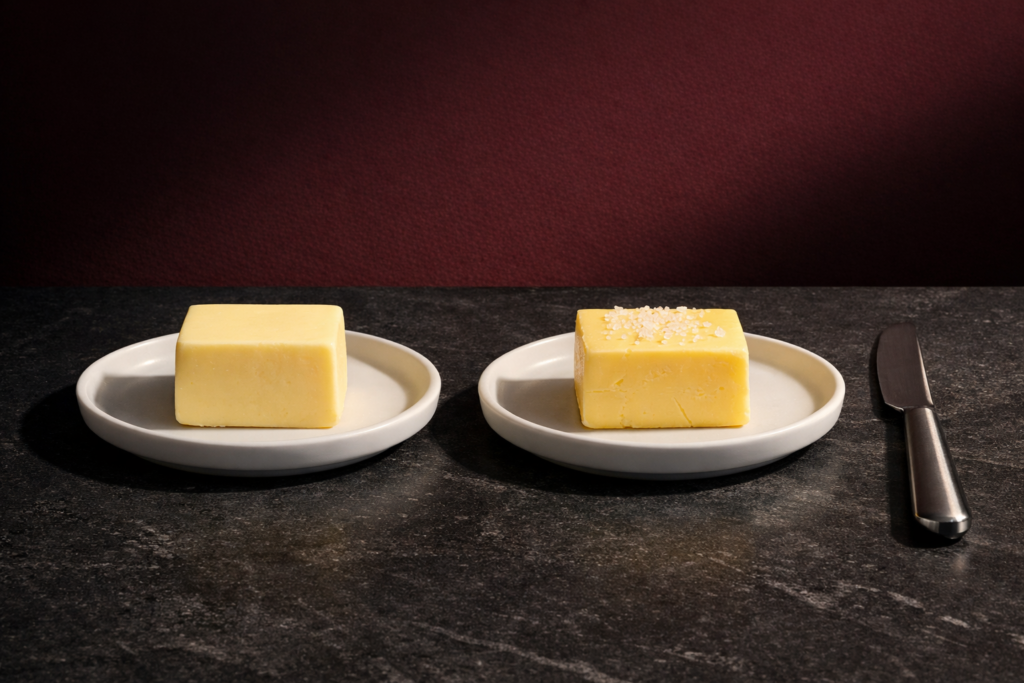
When it comes to salted vs unsalted butter, the short answer is simple: use unsalted butter when you want full control over seasoning, especially in baking, and use salted butter when you want a convenient, ready-seasoned butter for spreading, finishing, and everyday cooking. Both are useful, but they are not always interchangeable without a small adjustment.
Butter seems straightforward, yet the choice can affect flavor, texture, and consistency. The salt level in salted butter varies by maker and by region, so the best option depends on what you are making and how precise you need the result to be. Here is how to choose with confidence.
Salted vs unsalted butter: the main difference
Both types are made from cream, but salted butter has added salt while unsalted butter does not. That sounds minor, but it changes three important things:
- Flavor: Salted butter tastes more savory and can make foods seem richer.
- Control: Unsalted butter lets you season a recipe exactly as you want.
- Storage: Salt can help butter keep its flavor a bit longer, though both types still need proper storage.
Salted butter is often preferred at the table, on toast, or melted over vegetables because it already tastes balanced. Unsalted butter is usually the standard for baking because it gives more predictable results.
Why many bakers prefer unsalted butter
If you read a baking recipe closely, it often specifies unsalted butter. There are good reasons for that.
You control the salt yourself
Baking is more exact than most savory cooking. A little extra salt can improve flavor, but too much can throw off the balance of a cake, cookie, or pastry. Since different butters contain different amounts of salt, unsalted butter gives you a cleaner starting point.
You taste the butter more clearly
In pastries, butter cookies, shortbread, and buttercream, the flavor of the butter matters. Unsalted butter can taste sweeter and more purely creamy because there is no added salt masking or sharpening the flavor.
You get more consistency from recipe to recipe
A recipe writer can tell you to add a certain amount of salt if the butter itself is not adding any. That makes the recipe more repeatable, whether you are baking a tender sponge cake or laminated dough.
This does not mean salted butter ruins baking. It simply means you need to account for the salt already in the butter.
When salted butter is the better choice
Salted butter is not a lesser ingredient. In the right context, it is exactly what you want.
For spreading and table use
On bread, toast, muffins, pancakes, crumpets, or warm baked potatoes, salted butter usually tastes fuller and more satisfying. The salt helps the butter stand out instead of tasting flat.
For quick everyday cooking
If you are scrambling eggs, sautéing greens, warming cooked rice, or finishing pasta, salted butter can save a step. It adds richness and seasoning at once.
For finishing dishes
A little salted butter melted over steamed vegetables, grilled fish, corn, or simple noodles can be enough to complete the dish. If a recipe is not highly precise, this convenience is useful.
That said, be careful if the dish also includes salty ingredients such as soy sauce, capers, anchovies, cured meats, or hard cheeses. In those cases, unsalted butter may be easier to manage.
How salt changes flavor and texture
Salt does more than make food taste salty. It changes how we perceive richness, sweetness, and aroma.
Flavor perception
Salt heightens flavor. In butter, it can make the dairy notes seem stronger and can bring more contrast to bland foods. That is why salted butter often tastes better on plain bread than unsalted.
Sweet recipes
In cookies, brownies, and cakes, a little salt can improve flavor and balance sweetness. But because the amount in salted butter is not always the same, it can make a recipe subtly different each time.
Texture in baking
The amount of salt in butter is usually not high enough to dramatically change texture on its own, but in delicate baking, precision matters. Extra salt can slightly affect dough behavior and overall balance, especially in recipes with little flour or a very mild flavor profile.
Can you substitute one for the other?
Yes. In most recipes, you can swap salted and unsalted butter if you make a small salt adjustment.
If using salted butter instead of unsalted
- Use the same amount of butter the recipe calls for.
- Reduce the added salt in the recipe slightly.
- Taste if possible, especially in savory dishes, frostings, or fillings.
For baking, this usually works well in cookies, bars, muffins, and quick breads. It matters more in very butter-forward recipes such as shortbread, puff pastry, buttercream, or simple cakes.
If using unsalted butter instead of salted
- Use the same amount of butter.
- Add a small pinch of salt to the dish, or season to taste.
- In table use, sprinkle a little flaky or fine salt over the buttered food if needed.
This is especially easy in cooking because you can taste and adjust. For toast or sandwiches, many people enjoy adding a tiny pinch of salt directly on top when using unsalted butter.
A practical note on salt levels
Because salt content varies, there is no single adjustment that works in every kitchen. If you bake often and want highly repeatable results, keep unsalted butter on hand. If you mostly cook by taste, either type can work well.
Best uses for each type of butter
Use unsalted butter for:
- Cakes and cupcakes
- Cookies where butter flavor is prominent
- Buttercream and frosting
- Pastry, pie dough, and laminated dough
- Custards, curds, and sauces where seasoning needs control
- Recipes with other salty ingredients
Use salted butter for:
- Toast, bread, and breakfast pastries
- Simple pasta, rice, and grain dishes
- Scrambled eggs and omelets
- Steamed or roasted vegetables
- Finishing grilled meats or fish
- Everyday pan cooking when exact salt control is less important
What about brown butter?
Both salted and unsalted butter can be browned, but unsalted is usually easier to control. Brown butter already has a deep, nutty flavor, and salt can push the balance further than you want, especially in desserts.
If you are making brown butter for cookies, sauces, or pasta:
- Choose unsalted butter when you want flexibility.
- Choose salted butter only if the rest of the dish is lightly seasoned and you know the butter’s flavor well.
Safety note: Butter can go from browned to burnt quickly. Use a light-colored pan if possible, watch carefully, and keep children away from the stove and hot fat.
Storage, freshness, and food safety
Both salted and unsalted butter should be stored carefully to protect flavor and food safety.
In the refrigerator
Keep butter well wrapped or in a covered container so it does not absorb odors from other foods. Butter picks up smells easily.
At room temperature
In many kitchens, a small amount of butter can be kept in a covered butter dish for short periods so it stays spreadable. However, room temperature, humidity, and food safety guidance vary by region and by season. In hot kitchens, butter can spoil or become unsafe more quickly. Check local food safety advice if you are unsure.
In the freezer
Butter freezes well. Wrap it tightly to prevent off flavors. Thaw in the refrigerator for best texture.
How to tell if butter is past its best
Butter that smells sour, stale, or unpleasant, or tastes rancid, should be discarded. If there is visible mold, do not try to salvage it.
Allergen note: Butter is a dairy product and is not suitable for people with milk allergy. Some people with lactose intolerance tolerate butter better than milk, but tolerance varies.
How to choose the right butter at the store
If you only want one butter in the kitchen, think about how you cook most often.
Choose unsalted if you:
- Bake regularly
- Like to control seasoning precisely
- Often make sauces, pastry, or frostings
Choose salted if you:
- Mainly use butter on bread or toast
- Cook simple savory meals
- Want one convenient everyday option
Keep both if you have space
Many keen home cooks do exactly this. Unsalted butter handles baking and precision cooking. Salted butter covers spreading, finishing, and casual use.
Common mistakes to avoid
Assuming all salted butter tastes the same
It does not. One brand or regional style may taste noticeably saltier than another. Taste yours and adjust accordingly.
Adding salt automatically
If you cook with salted butter, pause before seasoning the dish. Other ingredients may already contribute enough salt.
Using old butter in delicate recipes
Butter-forward recipes expose the flavor of the butter itself. If the butter is stale, you will notice.
Ignoring texture needs
Whether butter is salted or unsalted, temperature matters. Softened, cold, and melted butter behave differently in recipes, so follow the method closely.
Frequently asked questions
Is unsalted butter healthier than salted butter?
They are broadly similar, except salted butter contains added salt. If you are managing sodium intake, unsalted butter gives you more control.
Can I use salted butter for cookies?
Yes. Reduce the added salt a little and expect a slightly different flavor balance, especially in simple butter-rich cookies.
Why do chefs often use unsalted butter?
It gives them precise control over seasoning and more consistency across recipes.
Is salted butter better for toast?
Many people prefer it because the salt makes the butter taste richer and more complete on plain bread.
Does salted butter last longer?
Salt can help preserve flavor somewhat, but both types should still be stored properly and used while fresh.
Conclusion
The choice between salted and unsalted butter is less about which is better and more about which is better for the job. For baking and precise seasoning, unsalted butter is usually the safer choice. For toast, finishing, and everyday savory cooking, salted butter is often the more flavorful and convenient option. Once you know how each behaves, you can use both with confidence and make easy swaps when needed.


