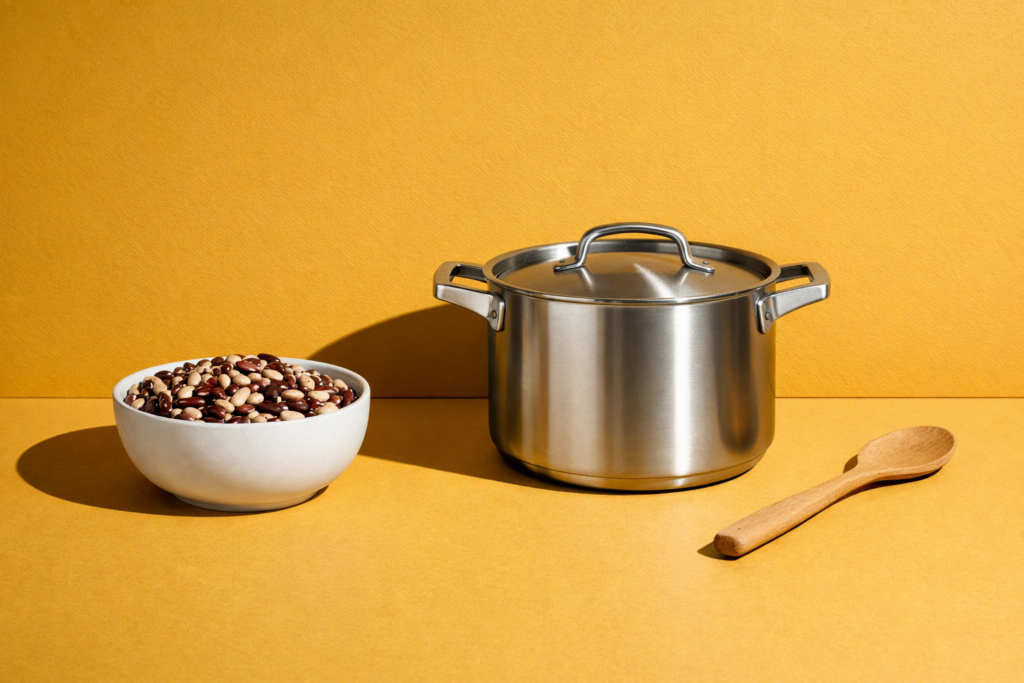
If you want to know how to cook dried beans, the short answer is this: sort and rinse them, soak them if desired, then simmer gently in plenty of water until tender. The exact timing depends on the bean variety, age and soaking method, but the process is simple, economical and worth learning.
Dried beans reward a little patience with better texture, fuller flavor and more control over seasoning than most canned beans. Once you understand the basics, you can cook black beans, chickpeas, cannellini beans, kidney beans, pinto beans and more with confidence.
Why cook dried beans instead of using canned?
Canned beans are convenient, but dried beans offer a few clear advantages.
- Texture control: You can cook beans to exactly the tenderness you want, from firm for salads to very soft for soups and purees.
- Flavor: Beans cooked from scratch often taste cleaner and richer.
- Flexibility: You can season the cooking liquid or keep it plain for different recipes.
- Less packaging: Dried beans are often sold with minimal packaging.
They do take longer, but most of that time is hands-off.
How to cook dried beans: the basic method
This stovetop method works for most common dried beans.
What you need
- 500 g (about 1 lb or 2 1/2 cups) dried beans
- 2 to 3 litres water (about 8 to 12 cups), plus more as needed
- 1 teaspoon salt, optional and adjustable
- A large pot
Step-by-step instructions
- Sort the beans. Spread them out briefly and remove any stones, damaged beans or debris.
- Rinse well. Place the beans in a colander and rinse under cold water.
- Soak if desired. Cover with plenty of cold water and soak using one of the methods below, or skip soaking for a longer cook.
- Drain and refill. If you soaked the beans, drain them and transfer to a pot with fresh water.
- Bring to a boil. Heat the pot until the water reaches a boil, then reduce to a gentle simmer.
- Skim if needed. Some beans release foam early in cooking. You can skim it off with a spoon if you like.
- Cook gently until tender. Stir occasionally and add more hot water if the beans begin to rise above the liquid.
- Season near the end or during cooking, depending on preference. Salt can be added once the beans start to soften, or earlier in moderate amounts if you prefer. Avoid strongly acidic ingredients until the beans are nearly tender.
- Test several beans. They should be creamy or tender all the way through, not chalky in the center.
- Cool and store. Use immediately or cool safely for refrigeration or freezing.
Safety note: For red kidney beans, raw or undercooked beans must be boiled briskly to destroy a natural toxin. A true rolling boil at the start is important. If you use a slow cooker, do not rely on it for raw kidney beans unless the appliance guidance specifically says it is safe for that bean type and cooking method. When in doubt, pre-boil kidney beans first in fresh water.
Do you need to soak dried beans?
No. You can cook many beans without soaking, but soaking has benefits. It usually shortens cooking time and can help beans cook more evenly.
Overnight soak
Place the beans in a large bowl and cover with at least three times their volume of cold water. Soak in a cool place or in the refrigerator for 8 to 12 hours. Avoid leaving beans to soak for long periods in a warm room, since that can create a food-safety risk. Drain and rinse before cooking.
Quick soak
Put the beans in a pot, cover with plenty of water, bring to a boil for 2 minutes, then turn off the heat and let them stand for 1 hour. Drain and rinse before cooking.
No-soak method
Simply rinse, cover with fresh water and simmer until tender. This works well, especially if you plan ahead. Expect a longer cooking time.
How long do dried beans take to cook?
There is no single exact time because beans vary by type, size, freshness, water and cooking temperature. Older beans often take longer. Hard water can also slow softening in some places. Altitude and bean size also matter, so the times below are only approximate.
As a general guide after soaking:
- Black beans: about 60 to 90 minutes
- Pinto beans: about 60 to 90 minutes
- Cannellini or navy beans: about 45 to 90 minutes
- Chickpeas: about 90 to 120 minutes
- Kidney beans: about 60 to 90 minutes, after a brisk boil at the start
Without soaking, add more time. Sometimes much more. The best approach is to start checking early and then every 10 to 15 minutes.
Important safety notes
Beans are simple to cook, but a few safety points matter.
- Kidney beans need a proper boil: Raw or undercooked red kidney beans contain a natural toxin that is destroyed by vigorous boiling. Boil them briskly for at least 10 minutes at the start of cooking, or follow a method that uses soaking and then boiling in fresh water for at least 30 minutes. Do not cook raw red kidney beans in a slow cooker unless the appliance instructions specifically address this safely.
- Watch hot liquids: Pots of simmering beans can bubble up or splash. Use care when stirring and when lifting lids to avoid steam burns.
- Cool cooked beans safely: Do not leave cooked beans at room temperature for long periods. For large batches especially, divide them into shallow containers so they cool quickly, then refrigerate within 2 hours.
- Check for allergens in additions: If you add stock, spice blends or sauces, make sure they suit your dietary needs.
When to add salt, aromatics and acidic ingredients
Salt
There is a lot of debate around salting beans. In practice, moderate salting during cooking can improve flavor and may help beans stay evenly seasoned. If you prefer to play it safe, add salt once the beans are beginning to soften. A simple starting point is 1 teaspoon for 500 g (about 1 lb) dried beans, but this is only a guideline and you can adjust to taste.
Aromatics
You can add flavor to the pot without overpowering the beans. Good options include:
- Onion, halved
- Garlic cloves
- Bay leaves
- Carrot or celery pieces
- Herb stems
Keep the seasoning gentle if you want versatile beans for several meals.
Acidic ingredients
Tomatoes, vinegar, lemon juice and other acidic ingredients can slow softening. Wait until the beans are nearly tender before adding them.
How much water to use
Beans need room to expand and enough liquid to stay submerged. A useful rule is to cover them by at least 5 cm (about 2 inches) of water in the pot. During long cooking, top up with more hot water if needed. Adding hot rather than cold water helps maintain a steady cooking temperature.
How to tell when beans are done
Done beans should be tender all the way through. Taste more than one bean from different parts of the pot. Signs they need more time include:
- A chalky or grainy center
- Skins splitting while the inside stays firm
- Uneven texture from bean to bean
For salads, aim for tender but intact. For dips, refried beans or creamy soups, cook a little longer.
Common mistakes and how to avoid them
Cooking too fast
A rolling boil can break up the beans and lead to uneven texture. Once the pot has come to a boil, lower it to a gentle simmer.
Adding acid too early
If the beans seem stubbornly firm, check whether tomatoes, vinegar or citrus went in too soon.
Using very old beans
Dried beans do keep well, but very old beans can take a very long time to soften and may never become fully creamy. If your beans stay tough after extended cooking, age may be the reason.
Not using enough water
Beans absorb a lot of liquid. If the pot starts looking dry, add more hot water before the beans are exposed.
Underseasoning
Plain cooked beans can taste flat. Even if you keep the pot simple, finish with salt and perhaps a little olive oil, herbs or spices for the final dish.
Can you cook dried beans in a pressure cooker?
Yes. A pressure cooker can cook beans much faster, often without soaking. Exact times vary by appliance and bean type, so follow the manufacturer instructions and local safety guidance for your model.
General tips:
- Do not overfill the cooker, because beans expand and can foam.
- Use plenty of water.
- Add oil only if your appliance guidance allows it.
- For kidney beans, make sure the method includes sufficient high-heat cooking to address food safety.
Pressure cooking is excellent for chickpeas and black beans when you want a quicker result.
How to store cooked beans
In the refrigerator
Cool the beans quickly, then refrigerate in their cooking liquid or drained in a covered container. For best safety, refrigerate within 2 hours and keep them cold at 4°C (40°F) or below. Use within 3 to 4 days.
In the freezer
Freeze in portions with a little cooking liquid so they do not dry out. Leave some space in the container for expansion. For best quality, use within a few months.
How to reheat
Reheat gently on the stovetop or in the microwave until piping hot. If they seem dry, add a splash of water or stock.
Easy ways to use cooked beans
- Stir into soups and stews
- Toss with olive oil, herbs and vegetables for salads
- Mash with garlic and spices for spreads or dips
- Add to rice, grain bowls or pasta dishes
- Simmer in tomato sauce once fully cooked
Cooking a batch at the start of the week makes fast meals much easier.
Frequently asked questions
Do dried beans need to be soaked overnight?
No. Overnight soaking is helpful but not essential. You can use a quick soak or cook them without soaking, though unsoaked beans usually take longer.
Why are my beans still hard after hours of cooking?
They may be old, the water may be hard, the simmer may be too low, or acidic ingredients may have been added too early. Keep cooking gently and add acid only near the end.
Should I cook beans covered or uncovered?
Partly covered is a good middle ground. This reduces evaporation while allowing some steam to escape. Fully uncovered may require more water; fully covered can sometimes lead to too much bubbling.
Can I use the cooking liquid?
Yes, often. Bean cooking liquid can add body and flavor to soups, stews and sauces. If the liquid tastes good and is not overly salty, save some.
How much cooked beans does 500 g (about 1 lb) dried make?
It depends on the variety, but dried beans usually roughly double or more in volume after cooking. Expect enough for several meals.
Conclusion
Learning how to cook dried beans comes down to a few basics: rinse and sort, soak if you want to shorten the cooking time, simmer gently in plenty of water, and season thoughtfully. Keep the safety steps in mind for kidney beans, soaking, and storage, and dried beans become one of the most useful staples in the kitchen.


