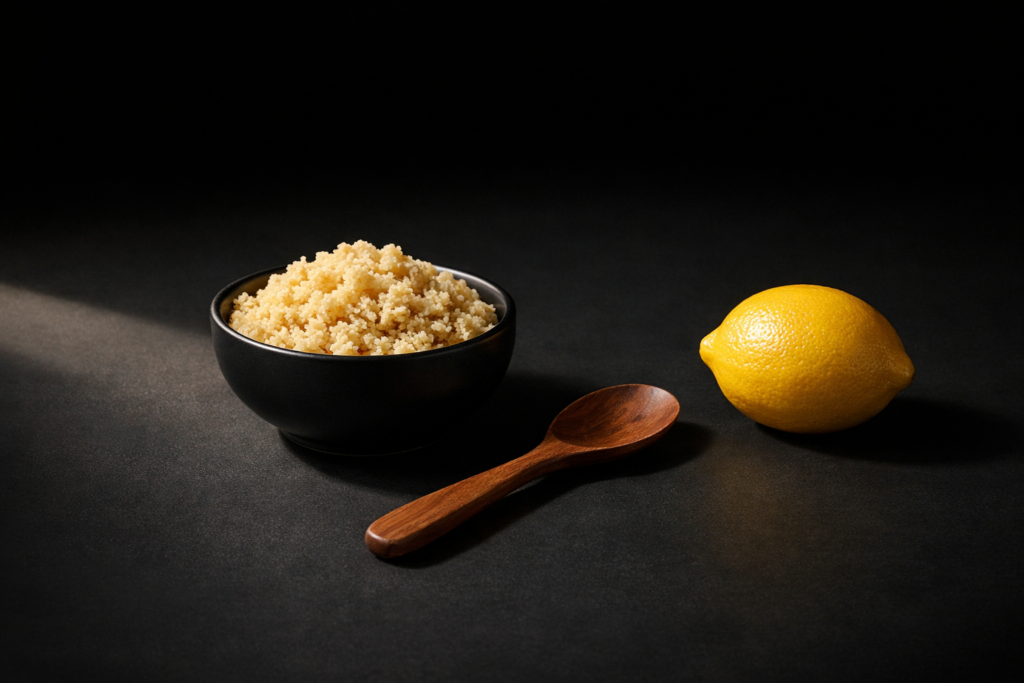
If you want to know how to cook couscous, the short answer is this: bring liquid to a boil, stir in couscous, cover, let it steam off the heat for about 5 minutes, then fluff with a fork. That basic method works for most regular couscous, but the best texture depends on using the right liquid ratio, choosing the correct type, and resisting the urge to overcook it.
Couscous is quick, versatile, and easy to flavor, which makes it useful for weeknight dinners, salads, and warm grain bowls. Even so, it can turn gummy, bland, or clumpy if you use too much liquid or skip the fluffing step. Here is how to get light, separate grains every time.
What couscous is and why it cooks so quickly
Couscous is made from semolina wheat that has been moistened and rolled into tiny granules, then dried. Because it is small and partially processed, regular couscous cooks much faster than rice or many other grains.
You will usually see three main types:
- Moroccan couscous: the smallest and fastest-cooking type. This is the one most people mean when they ask how to cook couscous.
- Israeli couscous: also called pearl couscous. The grains are larger, rounder, and usually cooked more like pasta.
- Lebanese couscous: larger again, sometimes called moghrabieh. It takes longer and needs more simmering.
This guide focuses mainly on regular Moroccan couscous, with notes for pearl couscous later on.
How to cook couscous: the basic method
For standard instant or quick-cooking couscous, the simplest method is closer to steeping than boiling. The couscous absorbs hot liquid and finishes by steaming in the covered pan or bowl.
The usual ratio
A reliable starting point is:
- 1 part couscous
- 1 part hot liquid
Some brands recommend slightly more liquid, but starting with equal parts usually gives a fluffier result. If your package gives different instructions, follow those first, since grain size can vary.
For example:
- 200 millilitres couscous + 200 millilitres water or stock
- 250 millilitres (1 cup) couscous + 250 millilitres (1 cup) liquid
Basic ingredients
- 250 millilitres (1 cup) couscous
- 250 millilitres (1 cup) water or stock
- 5–10 millilitres (1–2 teaspoons) olive oil or butter
- Pinch of salt, unless your stock is already well salted
Step-by-step instructions
- Measure the couscous. Put it in a heatproof bowl or medium saucepan.
- Heat the liquid. Bring the water or stock to a boil. Stir in the oil or butter and salt.
- Combine. Pour the hot liquid over the couscous, or add the couscous to the pan of liquid and stir once.
- Cover. Immediately cover with a lid or plate to trap the steam.
- Rest for 5 minutes. Do not keep boiling it. The couscous should absorb the liquid off the heat.
- Fluff gently. Use a fork to separate the grains. Break up any small clumps before serving.
That is all most couscous needs.
Best liquid, seasoning, and flavor tips
Plain water works, but couscous improves quickly with a few small changes.
Use stock for more depth
Vegetable, chicken, or other light stock gives couscous more savory flavor than water alone. If using stock, taste before adding extra salt.
Add fat early
A little olive oil or butter helps coat the grains and reduces clumping. It also improves mouthfeel.
Season while the liquid is hot
Salt dissolves evenly in hot liquid, so the couscous tastes seasoned throughout rather than only on the surface.
Good add-ins after cooking
- Chopped herbs such as parsley, cilantro, or mint
- Lemon zest or a squeeze of lemon juice
- Toasted nuts
- Dried fruit such as raisins or chopped apricots
- Cooked chickpeas or lentils
- Roasted vegetables
- Warm spices such as cumin, coriander, cinnamon, or paprika
If adding juicy ingredients like tomatoes or citrus, fold them in after fluffing so the couscous does not turn wet and heavy.
How much couscous to cook per person
Couscous expands as it absorbs liquid, so a little goes a long way.
- Side dish: about 60–80 grams dry couscous per person
- Main dish or salad base: about 80–100 grams dry couscous per person
If measuring by volume, about 125 millilitres (1/2 cup) dry couscous is often enough for one generous serving as a side.
Common mistakes and how to fix them
It is clumpy
This usually happens when the couscous sits too long without fluffing, or when it is packed down while steaming.
Fix: Drizzle over a small amount of olive oil or a spoonful of hot water, then fluff thoroughly with a fork.
It is soggy
Too much liquid is the usual cause. Couscous should be tender, not swimming.
Fix: Spread it on a tray or wide plate so steam can escape, then fluff. Next time, reduce the liquid slightly.
It is too dry or still firm
Either the ratio was too low or it did not steam long enough.
Fix: Sprinkle over 15–30 millilitres (1–2 tablespoons) hot water, cover again, and let it rest for 2–3 more minutes.
It tastes bland
Couscous needs enough salt and often benefits from stock, herbs, acid, or spice.
Fix: Fold in lemon juice, olive oil, herbs, and a pinch of salt while it is still warm.
How to cook pearl couscous
Pearl couscous is larger and does not cook the same way as regular couscous. It is usually simmered in water like pasta or toasted and cooked by absorption.
Simple simmering method
- Bring a pot of salted water to a boil.
- Add the pearl couscous.
- Simmer until tender, usually 8–12 minutes, depending on the brand.
- Drain well.
- Toss with a little olive oil to prevent sticking.
Absorption method
- Heat 15 millilitres (1 tablespoon) olive oil in a pan.
- Add 250 millilitres (1 cup) pearl couscous and stir for 1–2 minutes until lightly toasted.
- Add about 375–500 millilitres (1 1/2 to 2 cups) hot stock or water.
- Cover and simmer gently until the liquid is absorbed and the couscous is tender.
- Rest briefly, then fluff.
Check the package directions if you are unsure, since size varies.
Serving ideas for couscous
Couscous is neutral enough to work in many kinds of meals.
As a quick side dish
Serve it with grilled vegetables, roasted chicken, fish, stews, or braised beans.
As a salad base
Cool the couscous after fluffing, then mix with chopped cucumber, tomatoes, herbs, lemon juice, and olive oil.
As part of a grain bowl
Top warm couscous with roasted vegetables, chickpeas, yogurt, tahini sauce, or a soft-cooked egg. If serving eggs, meat, or seafood, make sure they are cooked safely according to local food guidance.
For a sweeter version
Cook it in lightly sweetened milk or a milk alternative, then add cinnamon, fruit, and nuts. Watch closely when heating milk, as it can boil over quickly.
Storage, reheating, and food safety
Couscous is easy to make ahead, but it should be handled carefully once cooked.
- Cool leftovers promptly and refrigerate in a covered container.
- Use within 3–4 days for best quality.
- Reheat until piping hot.
- If it seems dry after chilling, add a spoonful of water before reheating and fluff again.
Food safety note: Take care with hot steam when lifting the lid after resting. Use a dry cloth or oven mitt if the pan or bowl is hot. If you are cooking for someone with a wheat allergy, couscous is not suitable because it contains gluten.
Can you cook couscous without a stove?
Yes. Regular couscous can often be made with just boiled liquid from a kettle, as long as the couscous is in a heatproof bowl and covered tightly. Electrical products and voltage standards vary by region, so always use appliances according to local guidance and manufacturer instructions.
Pour freshly boiled water or stock over the couscous, cover, and let it stand for 5 minutes before fluffing. This works best for quick-cooking couscous, not pearl couscous.
Frequently asked questions
Do you boil couscous like rice?
Usually no. Regular couscous is normally covered with boiling liquid and left off the heat to absorb it. Pearl couscous is more often simmered.
What is the water-to-couscous ratio?
For regular couscous, start with 1:1 by volume. Some brands may need slightly more, so check the package if available.
Should you rinse couscous before cooking?
No, regular couscous does not usually need rinsing. Fluffing after steaming is more important for good texture.
Can you cook couscous in stock instead of water?
Yes. Stock is one of the easiest ways to add flavor. Just reduce added salt if the stock is already seasoned.
Why is my couscous sticky?
Sticky couscous is usually caused by too much liquid, overhandling while wet, or not fluffing it once it has rested.
Conclusion
Once you know the basic ratio and method, couscous is one of the easiest staples to cook well. Use equal parts liquid and couscous for most regular varieties, cover and rest it rather than boiling it hard, and always fluff before serving. From there, a little stock, olive oil, herbs, or lemon can turn it into a side dish you will want to make often.


