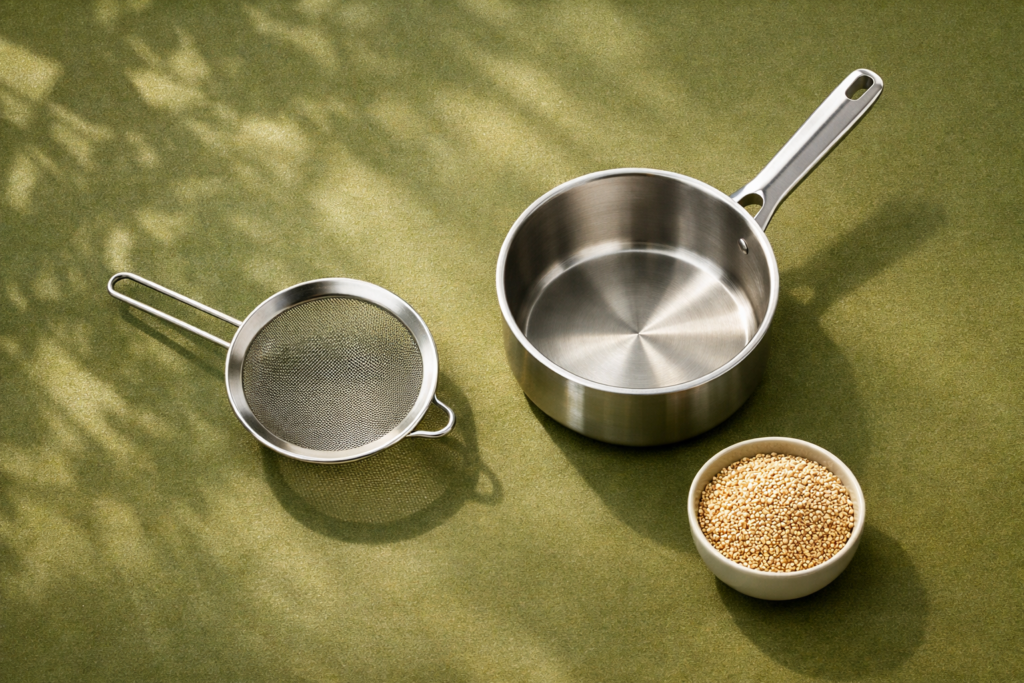
If you want to know how to cook quinoa without bitterness, the short answer is this: rinse it very well, use the right water ratio, cook it gently, and let it rest before fluffing. Those few steps remove the soapy coating that causes bitterness and help the grains turn light and tender instead of wet or harsh-tasting.
Quinoa cooks quickly, has meaningful protein content for a grain, and works in everything from grain bowls to salads and soups. But many people try it once, taste an unpleasant bitter edge, and assume they do not like it. Usually, the issue is not quinoa itself. It is the natural coating on the seed, called saponin, or a cooking method that leaves it soggy and flat. With a few small adjustments, quinoa becomes mild, nutty, and easy to use.
Why quinoa tastes bitter
Quinoa is coated in natural compounds called saponins. These help protect the plant, but they can taste bitter or soapy if they are not washed away. Some packaged quinoa is sold as pre-rinsed, but it is still worth rinsing it yourself. A quick wash often makes a noticeable difference.
Bitterness can also seem stronger if quinoa is overcooked, underseasoned, or cooked in too much water. Instead of tasting gently nutty, it can end up dull on the inside and unpleasant around the edges.
There is another possible cause: old quinoa. Like other pantry ingredients, quinoa loses quality over time. If it smells stale, dusty, or slightly rancid, replace it.
How to cook quinoa: the basic method
This is the most reliable stovetop method for fluffy quinoa with a clean, mild flavor.
What you need
- 185 g quinoa (1 cup)
- 480 ml water or stock (2 cups)
- 1/4 teaspoon fine salt, or to taste
- Fine-mesh sieve
- Medium saucepan with lid
You can scale this up or down. For larger batches, keep the same basic ratio and choose a pan with enough room for the quinoa to expand.
Step-by-step instructions
- Rinse the quinoa well. Put the quinoa in a fine-mesh sieve and rinse under cold running water for 30 to 60 seconds, rubbing the grains lightly with your fingers or shaking the sieve. This helps remove the saponins. If your sieve holes are too large, the grains may slip through, so use a very fine sieve.
- Optional: toast for better flavor. Add the drained quinoa to a dry saucepan or a saucepan with 1 teaspoon of oil. Stir over medium heat for 2 to 3 minutes, until it smells nuttier. Watch closely so it does not scorch.
- Add liquid and salt. Pour in 480 ml (2 cups) water or stock and add the salt. If using stock, taste before adding more salt later, as some stocks are already seasoned.
- Bring to a boil, then lower the heat. Once it reaches a gentle boil, reduce to low heat and cover with a tight-fitting lid.
- Simmer gently. Cook for 12 to 15 minutes, or until the liquid is absorbed. Avoid lifting the lid repeatedly, as trapped steam helps the quinoa cook evenly.
- Rest off the heat. Turn off the heat and leave the pan covered for 5 to 10 minutes. This resting step lets the steam finish the cooking and helps the grains firm up.
- Fluff and serve. Use a fork to fluff the quinoa. The grains should look tender, with the tiny germ ring visible around each seed.
The result should be soft but separate, not mushy. If there is a little water left at the end, drain it off. If the quinoa seems too firm, add a splash of water, cover, and steam for another 1 to 2 minutes.
The best quinoa-to-water ratio
A common starting point is 1 part quinoa to 2 parts water by volume, which works well for many brands and for beginners. That means 240 ml quinoa to 480 ml water (1 cup to 2 cups).
Some cooks prefer slightly less liquid for a firmer, fluffier result, especially if the quinoa has been rinsed thoroughly and left wet. In that case, try about 430 to 450 ml water (roughly 1 3/4 to 1 7/8 cups) for 185 g quinoa (1 cup).
If you are making quinoa for salads, a slightly drier texture is often best. For softer quinoa to serve warm or add to soups, the full 480 ml (2 cups) works well.
When to adjust the ratio
- For salads: use a little less water for firmer grains.
- For porridge or softer bowls: use the standard amount or a touch more.
- At higher altitudes: cooking can take longer, and you may need a little extra liquid. Check and adjust as needed.
- Different quinoa colors: red and black quinoa often stay slightly firmer than white quinoa and may need an extra minute or two.
Tips to remove bitterness and improve flavor
1. Never skip the rinse
This is the most important step. Even if the package says pre-rinsed, rinsing again is a good habit. A brief rinse can mean the difference between clean, nutty flavor and an unpleasant aftertaste.
2. Toast it before adding water
Toasting does not remove bitterness on its own, but it deepens the flavor and gives quinoa a more appealing aroma. If quinoa tastes bland to you, this step helps.
3. Use stock, aromatics, or both
Cooking quinoa in vegetable, chicken, or other stock adds savory depth. You can also add simple aromatics such as a crushed garlic clove, a strip of lemon peel, or a bay leaf. Remove large aromatics before serving.
If using packaged stock, check labels for allergens and sodium levels if that matters in your kitchen.
4. Salt it properly
Underseasoned quinoa can taste flat, which sometimes makes bitterness seem more noticeable. Add a small amount of salt during cooking, then taste and adjust after fluffing.
5. Let it rest
Resting the cooked quinoa with the lid on gives moisture time to settle evenly. If you fluff too soon, the grains can seem wetter and less distinct.
6. Add brightness after cooking
A little lemon juice, chopped herbs, olive oil, or a knob of butter can round out the flavor. Add these after cooking, not before, so the base cooks properly.
Common mistakes when cooking quinoa
Not rinsing enough
If quinoa tastes soapy, bitter, or harsh, rinsing is usually the reason. Use a fine sieve and enough running water to wash the grains thoroughly.
Using too much water
Excess water can leave quinoa soggy and washed-out in flavor. Start with the standard ratio, then adjust slightly once you know how your preferred brand behaves.
Boiling too hard
A vigorous boil can cook the outside too fast and create uneven texture. Once the liquid boils, reduce to a gentle simmer.
Skipping the resting step
Freshly cooked quinoa often improves after a short covered rest. This helps finish the steaming process and makes fluffing easier.
Leaving it unseasoned
Plain quinoa needs at least a little salt. It is a blank canvas, but blank does not need to mean bland.
Different ways to cook quinoa
Rice cooker method
Many rice cookers handle quinoa well. Rinse first, then add quinoa and water using the same approximate ratio as stovetop cooking. Results vary by machine, so check your manual if you have one. Because appliances differ by region and model, follow local electrical safety guidance and never overfill the cooker.
Pressure cooker method
Rinsed quinoa cooks quickly under pressure. A common approach is a slightly lower water ratio than stovetop, plus a short natural release. Since pressure cooker designs vary, use the manufacturer instructions for safe operation. Steam can cause burns, so release pressure carefully and keep face and hands away from the vent. Never open the lid until the pressure has fully released, and follow the appliance manual exactly.
Baked quinoa
You can also bake quinoa in a covered oven-safe dish with hot liquid. This is useful when cooking a larger batch. Make sure your dish and lid are oven-safe, and use dry cloths or oven gloves when handling hot cookware.
White, red, black, and tricolor quinoa
White quinoa is the softest and mildest. It cooks quickly and is often the easiest place to start if you are unsure about texture.
Red quinoa tends to hold its shape a little better, making it useful for salads and grain bowls. Black quinoa is slightly earthier and often the firmest. Tricolor quinoa is simply a mix, so the texture will be a little varied.
All types benefit from the same basic method: rinse well, simmer gently, rest, and fluff. You may need to add 1 to 3 extra minutes for red or black quinoa.
How to use cooked quinoa
- As a side dish: serve it like rice with roasted vegetables, grilled meats, fish, or beans.
- In salads: cool it first so the grains stay separate and the dressing does not turn it soft.
- In soups: stir cooked quinoa in near the end so it warms through without overcooking.
- For breakfast: simmer cooked quinoa with milk or a plant-based alternative, cinnamon, and fruit.
- In stuffed vegetables: mix with herbs, onions, and cheese or legumes.
How to store and reheat quinoa safely
Cooked quinoa should not sit at room temperature for long. Food safety guidance is to refrigerate leftovers within 2 hours, or within 1 hour if the room is above 32°C (90°F). Once it has stopped steaming heavily, cool it and refrigerate it in a covered container.
To reheat, add a splash of water and warm it on the stovetop or in a microwave-safe dish until heated through. Stir partway through for even heating. Reheat until piping hot.
If you are preparing quinoa for packed lunches, make sure it is cooled and stored cold before packing, and use suitable chilled storage if needed in your climate.
Frequently asked questions
Do I really need to rinse pre-rinsed quinoa?
Yes, it is still a good idea. Pre-rinsed quinoa is often better than unrinsed, but an extra rinse can further reduce any lingering bitter or soapy taste.
Why is my quinoa mushy?
Usually because of too much water, cooking too long, or skipping the rest and drain step. Try using slightly less liquid and checking for doneness earlier.
Why is my quinoa still crunchy?
It may need a bit more water or a few more minutes of gentle cooking. Cover it, add a small splash of water, and steam briefly until tender.
Can I cook quinoa in stock instead of water?
Yes. Stock adds more flavor and works well for savory dishes. Just keep an eye on salt levels, especially with concentrated or packaged stock.
How long does cooked quinoa keep?
In the refrigerator, cooked quinoa is generally best within a few days when stored in a covered container. If in doubt, follow local food safety guidance and discard anything with an off smell or texture.
Conclusion
Learning how to cook quinoa well comes down to a few simple habits: rinse thoroughly, use the right amount of liquid, simmer gently, and let it rest before fluffing. Those steps remove bitterness and give you quinoa that is light, tender, and easy to enjoy. Once you have the basic method, it becomes one of the most useful ingredients in the kitchen.


