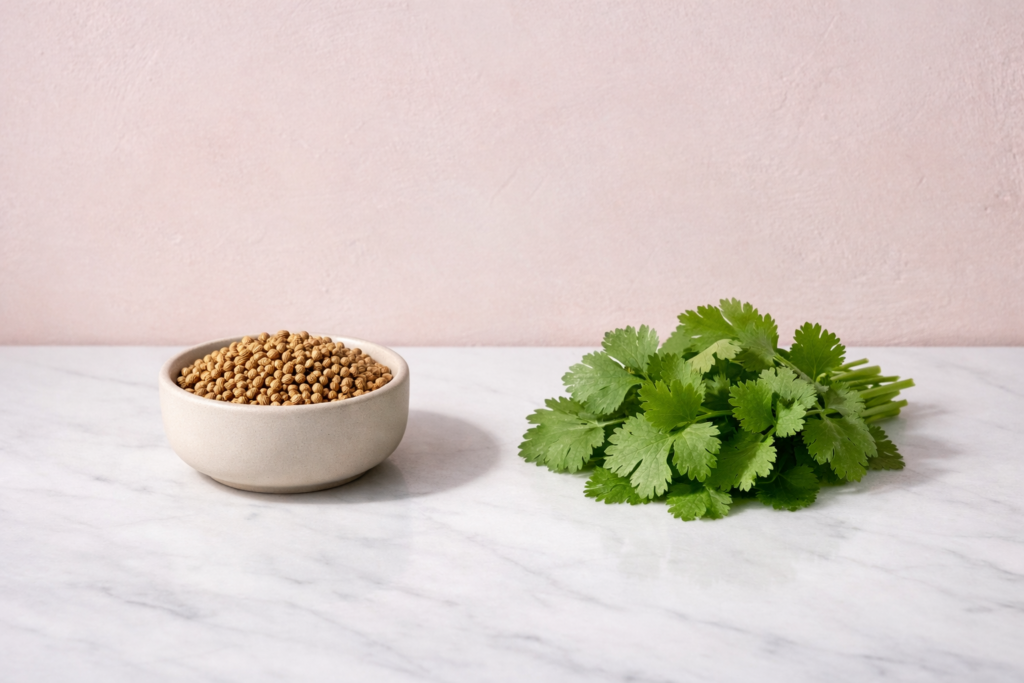
The short answer to cilantro vs coriander is this: they usually come from the same plant, but the words often refer to different parts of it. In American English, cilantro usually means the fresh leaves and tender stems, while coriander usually means the dried seeds. In many other places, coriander can mean the whole plant, with context showing whether the leaves or seeds are meant.
That naming difference causes plenty of confusion in recipes and at the store. Once you know which part of the plant is being discussed, the rest becomes much easier. Fresh leaves taste bright, green, and citrusy to many people, while the seeds are warm, fragrant, and gently aromatic.
Cilantro vs coriander: the basic difference
Cilantro and coriander both come from Coriandrum sativum, a plant in the carrot family, Apiaceae. The difference is usually about which part of the plant you are using and which variety of English the recipe uses.
- Cilantro: fresh leaves and soft stems
- Coriander seeds: the dried seeds of the same plant
- Coriander in many countries: the whole plant, with leaves, stems, roots, and seeds understood by context
If a recipe says “add cilantro at the end,” it almost always means the fresh leaves and stems. If it says “toast coriander,” it usually means the dried seeds.
This matters because the two taste very different and are not interchangeable in equal ways. Fresh cilantro brings freshness and a sharp herbal lift. Coriander seeds bring spice, warmth, and a rounder aroma.
Why the names vary by region
Language is the main reason for the confusion. American English commonly separates the names into cilantro for leaves and coriander for seeds. Other English-speaking regions often use coriander for both, sometimes specifying coriander leaves or fresh coriander when needed.
If you cook from international recipes, it helps to pause and check context.
How to read a recipe quickly
- Look at the ingredient form. If it says bunch, leaves, chopped, or garnish, it means fresh cilantro or coriander leaves.
- Look for spice cues. If it says seeds, ground, toasted, or crushed, it means coriander seed.
- Check the method. Fresh leaves are usually stirred in at the end. Seeds are often toasted early or added during cooking.
- Watch for roots. Some cuisines use coriander roots for pastes, stocks, and marinades. If unavailable, stems can sometimes stand in, though the flavor is not identical.
If you are unsure, do not guess when making a dish for guests, especially if flavor balance matters. A quick check of the ingredient list and method usually clears it up.
Do cilantro and coriander taste the same?
No. They are related because they come from the same plant, but they do not taste the same.
What fresh cilantro tastes like
Fresh cilantro has a lively, green, citrusy flavor with a slightly peppery edge. The leaves are delicate, and the stems are often even more flavorful. Many people love its freshness in salsas, curries, soups, salads, noodles, and chutneys.
Some people, however, find cilantro tastes soapy or unpleasant. Genetic variation is often cited as one reason for that difference in perception. If you are cooking for a group, it is wise to serve cilantro on the side when possible.
What coriander seeds taste like
Coriander seeds are nutty, warm, citrusy, and fragrant. They have none of cilantro’s sharp leafy quality. Whole seeds can be toasted to deepen the flavor, then ground or crushed. Ground coriander is common in spice blends, rubs, stews, baked goods, and pickles.
Because the flavors are so different, fresh cilantro is not a substitute for coriander seed, and coriander seed is not a substitute for fresh cilantro as a garnish.
Which parts of the plant are used?
Almost every part of the coriander plant can be useful in the kitchen.
Leaves
These are most often called cilantro in American English. Use them fresh for brightness. They are best added at the end of cooking or used raw.
Stems
The tender stems are edible and flavorful. In many dishes, especially sauces, chutneys, and marinades, you can chop the stems along with the leaves. Discard only any thick, dry, or damaged lower stems.
Roots
Coriander roots are prized in some cuisines for their concentrated flavor. Scrub them very well under plain running water before use to remove grit. Keep them separate from ready-to-eat foods while you prep to help avoid cross-contamination.
Seeds
These are the dried fruits commonly called coriander seeds. They can be used whole, lightly crushed, or ground. Toasting them in a dry pan until fragrant can bring out more aroma, but spices can scorch very quickly, so keep the heat moderate and watch them constantly. Do not walk away from the pan.
How to use cilantro and coriander in cooking
Knowing when to use each one makes recipes more successful.
Best uses for fresh cilantro
- As a garnish for soups, stews, curries, and grilled foods
- In salsas, relishes, and chutneys
- Mixed into salads or grain dishes
- Blended into sauces such as herb dressings or green chutney
- Stirred into cooked dishes just before serving
Heat quickly dulls cilantro’s fresh character, so it is usually added late. If a dish needs a clean, bright finish, cilantro is often the right choice.
Best uses for coriander seeds
- Toasted and ground for spice mixes
- Added to curries, soups, and braises
- Used in pickling liquids
- Rubbed onto meat, fish, or vegetables before cooking
- Added to breads, savory bakes, or some sweet recipes
Coriander seed works well with cumin, black pepper, fennel, turmeric, chili, garlic, ginger, and citrus. It is a building-block spice rather than a finishing herb.
Can you substitute one for the other?
Usually, no. Since the flavors are very different, substitution changes the dish.
When substitution does not work well
- Fresh garnish: ground coriander cannot replace a handful of chopped cilantro
- Spice blend: fresh cilantro cannot replace coriander seed in a dry rub or curry powder
- Texture matters: leaves add moisture and color, while seeds add spice and aroma
Better backup options
If you do not have fresh cilantro, you might use flat-leaf parsley plus a little lime zest for a different but fresh effect. If you do not have coriander seed, a small amount of cumin or caraway may help in some savory dishes, though the flavor will not match exactly.
The safest approach is to think in terms of function: are you replacing freshness, citrusy lift, warmth, or spice depth?
How to buy and store them
Buying fresh cilantro
Choose bunches with bright green leaves and firm stems. Avoid herbs that are yellowing, slimy, or badly wilted.
Storing fresh cilantro
- Trim the very end of the stems.
- Place the bunch upright in a jar with a little water, like flowers.
- Loosely cover the leaves with a bag if you like.
- Refrigerate at 40°F (4°C) or below.
- Change the water every day or two.
You can also rinse cilantro under clean running water, dry it well, then wrap it lightly in a clean towel or paper towel before refrigerating. Do not use soap, detergent, or produce wash on herbs. Moisture control matters: too wet and it rots, too dry and it wilts.
Buying coriander seed
Look for whole seeds that smell fragrant when crushed. Whole spices generally keep their flavor longer than ground ones.
Storing coriander seed
Keep whole or ground coriander in an airtight container away from heat, light, and moisture. If it smells faint or dusty, it is probably past its best for flavor, even if still safe to use.
What coriander looks like at different stages
Fresh cilantro leaves are soft, flat, and bright green, somewhat similar to flat-leaf parsley but usually more delicate and more deeply cut. The plant can also produce flowers and then seeds if left to mature.
Fresh green seeds, where available, have a flavor that bridges the leaves and the dried spice. Dried coriander seeds are small, round, and beige to light brown.
If you grow the plant yourself, hot weather can make it bolt, meaning it quickly sends up flowers and goes to seed. Once that happens, the leaves often become smaller and less tender. For the best leaves, harvest regularly and grow in conditions suited to your local climate.
Common recipe misunderstandings
“A bunch of coriander”
In many recipes, this means fresh leaves and stems. In American English, a writer might instead say cilantro. If the recipe also includes cumin, turmeric, or other spices, do not assume coriander means the ground spice unless the recipe specifies seeds or ground coriander.
“Ground coriander”
This always means the spice made from the seeds, not dried cilantro leaves.
“Coriander powder”
This is another name for ground coriander seed.
“Culantro” is not cilantro
These are different plants, even though the names sound similar. Culantro has a stronger flavor and is used differently in some cuisines. If a recipe calls for culantro, try to find that specific herb rather than assuming cilantro is identical.
How to get the best flavor from both
For cilantro
- Add it at the end of cooking
- Use stems as well as leaves when appropriate
- Pair with lime, chili, onion, garlic, mint, or yogurt
- Rinse under clean running water, then dry gently
Use a clean knife and cutting board, especially if preparing herbs alongside raw meat or seafood. Keep herbs separate from raw proteins to reduce food safety risks.
For coriander seed
- Toast whole seeds briefly in a dry pan over moderate heat until fragrant.
- Shake the pan often and stay at the stove the whole time.
- Cool slightly.
- Crush or grind just before using for stronger aroma.
Take care with hot pans and steam. Ground spices can also irritate eyes if handled carelessly, so avoid leaning directly over a pan or grinder.
Frequently asked questions
Is cilantro the same as coriander?
They usually come from the same plant. In American English, cilantro means the fresh leaves and stems, while coriander usually means the dried seeds.
Why do some recipes call it coriander and others cilantro?
It depends on regional language. Many English-speaking countries use coriander for the whole plant and specify coriander leaves or coriander seeds as needed.
Can I use dried coriander instead of fresh cilantro?
No, not as a direct replacement. Dried coriander usually means the ground seed spice, which tastes warm and aromatic rather than fresh and leafy.
What can I use if I do not like cilantro?
Flat-leaf parsley is a common substitute for freshness and color. You can add a little lime zest or mint, depending on the dish, for extra brightness.
Are cilantro stems edible?
Yes. Tender cilantro stems are edible and flavorful. In many recipes, especially sauces and chopped herb mixtures, you can use the stems and leaves together.
Conclusion
The difference between cilantro and coriander is usually not about two separate ingredients, but two forms of the same plant. Fresh cilantro gives brightness and lift, while coriander seeds bring warm, aromatic spice. Once you know which part a recipe wants and how names vary by region, you can shop, cook, and season with much more confidence.


