What is tapas? In simple terms, tapas are small Spanish dishes or snacks served to accompany drinks or to build into a casual meal. They can be as simple as olives or almonds, or as substantial as potatoes, seafood, cured meats, or small plates of stew. More than a single recipe, tapas are a way of eating: varied, social, and designed to encourage sharing.
That quick definition is useful, but tapas mean more than “small plates.” The tradition has regional roots, a distinct dining style, and a wide range of foods under one name. If you have ever wondered whether tapas are appetizers, a full meal, or a specific kind of Spanish food, the answer is: they can be all three, depending on how they are served.
What is tapas in Spanish food culture?
In Spanish food culture, tapas are small portions of food served in bars, restaurants, and homes. They are often enjoyed with wine, beer, vermouth, or non-alcoholic drinks, and they are usually ordered in several different varieties rather than as one large individual plate.
The word tapa is singular. Tapas is the plural form. You might order one tapa, but people often talk about “going for tapas,” meaning a meal or outing built around several small dishes.
Tapas are not defined by one ingredient list or one cooking method. They may be hot or cold, simple or elaborate, rustic or refined. Some are ready to eat straight away, while others are cooked to order.
What ties them together is the format: small portions, variety, and a shared table.
Where did tapas come from?
The exact origin of tapas is not fully settled, and several stories are often repeated. One common explanation links the word to the Spanish verb tapar, meaning “to cover.” According to this idea, a small piece of bread, ham, or another snack was once placed over a glass to protect the drink from dust or insects. Over time, that edible “cover” became part of the drinking ritual.
Whether that story is literally true everywhere or not, the broader historical picture is clear: in Spain, small savory bites became closely connected to social drinking and informal eating. Different regions developed their own favorites based on local ingredients, farming, fishing, and climate.
That is why tapas vary so much. Coastal areas may feature anchovies, squid, or shrimp. Inland regions may lean more heavily on cured meats, cheeses, legumes, and hearty cooked dishes. Olive oil, bread, potatoes, eggs, peppers, and preserved foods all appear frequently, but there is no single master list that defines tapas for every place.
Are tapas the same as appetizers or starters?
Not exactly. Tapas can overlap with appetizers, but they are not identical.
An appetizer or starter usually comes before the main course. Tapas may come before a larger meal, but they can also be the meal. If you order several dishes for the table, with bread and drinks, you may end up with a complete lunch or dinner without any separate main course.
Another difference is the social rhythm. Tapas are usually designed for mixing, matching, and sharing. Rather than each person eating one starter and one entrée, the table may fill gradually with many small plates.
In some places, tapas are served automatically with a drink. In others, they are ordered from a menu and paid for separately. Customs differ by region and by venue, so it is best not to assume one universal rule.
Common types of tapas
Because tapas are a category rather than one dish, the range is wide. Here are some common examples you may see.
Cold tapas
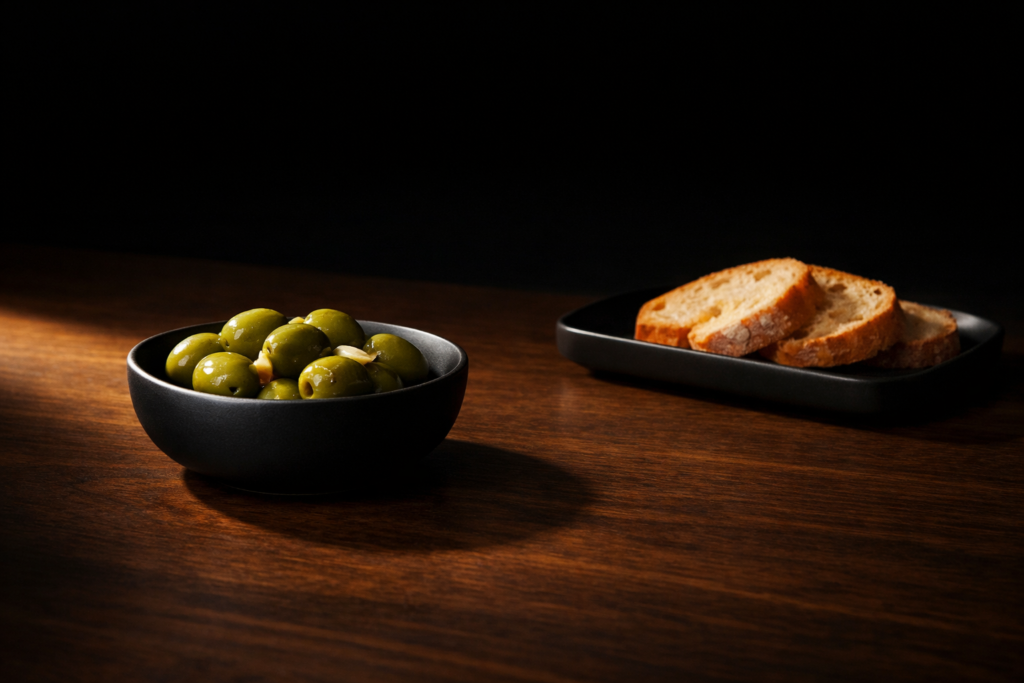
- Olives: plain, marinated, or stuffed.
- Cheese: often firm or semi-firm Spanish cheeses, served in cubes or slices.
- Cured meats: such as ham or sausage, sliced thin.
- Anchovies or boquerones: preserved fish, sometimes marinated in vinegar.
- Pan con tomate: bread rubbed or topped with tomato, often with olive oil and salt.
- Russian salad: a potato-based salad common in many tapas bars.
Hot tapas
- Tortilla española: a thick Spanish omelet made with eggs and potatoes.
- Patatas bravas: fried or roasted potatoes with a spicy sauce, sometimes with aioli.
- Croquetas: crisp breadcrumb-coated fritters with a creamy filling.
- Albondigas: meatballs in sauce.
- Gambas al ajillo: shrimp cooked with garlic and oil.
- Pimientos de padrón: small green peppers blistered in a hot pan.
- Fried squid or other seafood: often lightly battered and quickly fried.
Bread-based or skewer-style tapas
Some Spanish bars also serve small bites on bread or with a toothpick or skewer. In some regions, especially in northern Spain, these may be called pintxos rather than tapas. The two terms are related in practice but not identical.
As a general guide, tapas usually refers broadly to small dishes, while pintxos often refers to small prepared bites, sometimes arranged on bread and secured with a skewer. Usage varies by region, so local naming matters.
How tapas are usually served and eaten
Tapas are usually served in small dishes placed in the center of the table, though individual portions are also common. The goal is often variety rather than volume from one item.
A typical tapas meal may include:
- Something salty or briny, such as olives or anchovies
- A potato dish
- One or two protein-based plates, such as eggs, seafood, or meat
- Bread for sharing
- Something fresh or acidic to balance richer dishes
There is no fixed order that everyone follows, but a sensible flow often helps. Lighter cold dishes tend to work well first, followed by richer hot foods.
If you are sharing, it is good table manners to serve yourself small amounts at a time rather than treating one dish as your own. If a sauce is hot, oil-based, or served in a sizzling pan, take care with both steam and splatter.
How many tapas make a meal?
That depends on appetite, the size of each dish, and whether you are eating tapas as a snack or as a full meal.
As a rough guide:
- For a light snack, one to three tapas may be enough.
- For a shared meal, four to eight tapas for two people is common, depending on how substantial they are.
- For a larger group, order in rounds so you can adjust as you go.
Dense dishes like omelet, meatballs, fried potatoes, or croquettes are more filling than olives or marinated vegetables. Bread also changes the feel of the meal quickly.
It is usually better to start modestly and add more. Tapas are meant to feel relaxed, not overloaded from the start.
How to build a tapas-style meal at home
You do not need a restaurant setup to enjoy tapas. The easiest approach is to combine a few store-cupboard items with one or two freshly cooked dishes.
A simple formula
- Choose 1 cold item. For example, olives, cheese, sliced tomatoes, or marinated peppers.
- Choose 1 bread element. Good bread, toasted bread, or tomato-rubbed bread works well.
- Choose 2 hot dishes. Potatoes, eggs, mushrooms, shrimp, or croquettes are all good options.
- Add something fresh or sharp. A salad, pickled element, or citrusy dish keeps the table balanced.
- Serve in small bowls or plates. The presentation matters because tapas are about easy sharing.
Example menu for four people
- Olives with citrus peel and herbs
- Pan con tomate
- Tortilla española, cut into wedges
- Patatas bravas
- Garlic mushrooms or garlic shrimp
- Simple green salad
This kind of menu offers contrast in texture, temperature, and richness without requiring advanced cooking.
Timing tips
If you are cooking at home, prepare cold dishes first and keep hot dishes for last. Warm food loses its appeal quickly if it sits too long. Fried foods are best served soon after cooking.
Use warm plates for hot tapas if possible, and keep portions small enough that they are eaten while still at their best.
Kitchen science behind good tapas
Many classic tapas work because they balance strong flavors in small portions. Salt, acid, fat, and texture are especially important.
Why small portions taste satisfying
Rich foods such as croquettes, cured meats, aioli, or fried potatoes can feel heavy in large servings. In smaller amounts, they stay appealing and leave room for contrast from other dishes.
Why texture matters
A successful tapas spread usually mixes crisp, creamy, chewy, and juicy elements. Think of crunchy bread with soft tomato, crisp potatoes with smooth sauce, or silky omelet with briny olives.
Why acid and salt are useful
Acid from vinegar, tomato, lemon, or pickled vegetables cuts through rich foods. Salt enhances flavor and pairs naturally with drinks, which is one reason olives, anchovies, and cured meats appear so often.
Safety and food handling for tapas
Tapas are often served in multiple dishes, with plenty of reaching, sharing, and standing time on the table. That makes food safety worth paying attention to.
- Handle knives carefully: Many tapas involve slicing bread, cured meats, or vegetables. Use a stable board and keep fingers tucked back.
- Watch hot oil: Fried tapas and garlic oil dishes can splatter. Do not overcrowd pans, and keep children away from the stove area.
- Be careful with sizzling dishes: Small earthenware or metal pans stay hot longer than they look. Warn guests before serving.
- Cook seafood thoroughly where appropriate: If using shrimp, squid, or other seafood, buy it fresh and keep it chilled until cooking.
- Manage allergens: Common tapas allergens include shellfish, fish, eggs, dairy, gluten, and nuts. Label dishes clearly if serving guests.
- Do not leave perishable foods out too long: Egg-based, dairy-based, meat, and seafood dishes should not sit at room temperature for extended periods, especially in warm weather.
If you are adapting recipes for your region, always follow local food-safety guidance on storage temperatures and ingredient handling.
Tapas, meze, antipasti, and other small-plate traditions
Many cultures have traditions built around small shared dishes. Tapas are Spanish, but they sit within a wider global pattern of sociable, varied eating.
- Meze: Common in parts of the Eastern Mediterranean and Middle East, often including dips, salads, breads, and grilled items.
- Antipasti: Italian starters such as cured meats, vegetables, and cheeses.
- Dim sum: A Chinese tradition of many small dishes, often dumplings and steamed items.
- Banchan: Korean side dishes served alongside a meal.
These traditions are not interchangeable, and each has its own history and etiquette. But if you enjoy one, you may appreciate the same mix of variety, sharing, and contrast in another.
What is tapas really about?
At its heart, tapas are about more than portion size. They create a style of eating that feels flexible and communal. You can try several flavors in one sitting, linger over conversation, and shape the meal as you go.
That is why tapas remain so popular both inside and outside Spain. They fit casual gatherings, they reward balance and variety, and they make even simple foods feel generous.
Frequently asked questions
Is tapas always Spanish?
Yes. Tapas are a Spanish culinary tradition, even though many countries have their own small-plate customs.
Are tapas always small?
Usually, yes, but “small” is relative. Some tapas are just a few bites, while others are large enough to share between two or more people.
Do tapas have to be shared?
No, but sharing is common. You can order individual tapas for yourself or several for the table.
Can tapas be vegetarian?
Absolutely. Potatoes, peppers, mushrooms, olives, cheese, eggs, and tomato-based dishes all fit comfortably into a vegetarian tapas spread.
What should I drink with tapas?
Wine, beer, sparkling water, and non-alcoholic drinks all work. The best choice depends on the food and your preference.
Conclusion
So, what is tapas? It is a Spanish tradition of small dishes that can be a snack, a starter, or a full shared meal. Tapas are defined less by one recipe than by how they are served: varied, sociable, and full of contrast. Once you understand that, it becomes easy to enjoy them anywhere, whether at a tapas bar or around your own kitchen table.