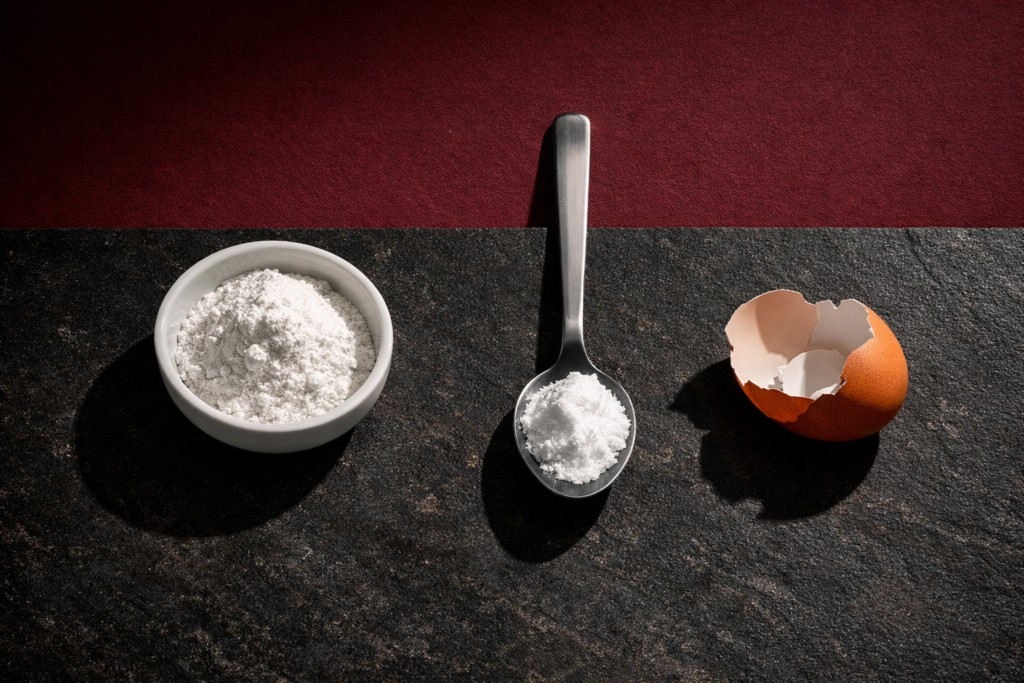
Baking soda vs baking powder comes down to one main difference: baking soda needs an acid to activate, while baking powder already contains both a base and an acid. Both are chemical leaveners that create gas bubbles in batter or dough, but they behave differently in recipes, affecting rise, browning, texture, and flavor.
If you have ever wondered why one recipe calls for baking soda, another uses baking powder, and some use both, the answer lies in kitchen chemistry. Once you understand that chemistry, it becomes much easier to bake reliably, troubleshoot flat cakes or bitter cookies, and make sensible substitutions when you need to.
Baking soda vs baking powder: the quick difference
Baking soda is pure sodium bicarbonate. It is alkaline, which means it reacts with acidic ingredients to produce carbon dioxide gas. That gas forms bubbles, helping batters and doughs rise.
Baking powder is a complete leavening mixture. It contains sodium bicarbonate plus one or more acidic ingredients and usually a starch to keep it dry and stable in storage. Because the acid is already included, baking powder can work with moisture and heat even if the recipe itself does not contain much acid.
- Use baking soda when the recipe includes acidic ingredients such as yogurt, buttermilk, lemon juice, vinegar, molasses, brown sugar, or natural cocoa powder.
- Use baking powder when the recipe has little or no acid and still needs lift, such as many plain cakes, muffins, biscuits, and pancakes.
- Use both when the recipe has some acid, but not enough to give the ideal rise on its own.
How baking soda works
Baking soda starts working when it meets acid and moisture. The reaction begins quickly, which is why batters made with baking soda often need to be baked soon after mixing.
In simple terms, the baking soda neutralizes some of the acid in the batter and releases carbon dioxide. Those gas bubbles expand in the heat of the oven, creating a lighter texture.
What baking soda does in a recipe
- Helps baked goods rise
- Encourages browning because alkaline conditions speed up browning reactions
- Can reduce sourness by neutralizing acids
- Influences spread and texture, especially in cookies
What happens if you use too much
Too much baking soda can leave a harsh, soapy, or metallic taste. It can also cause excessive browning and a coarse texture. If there is not enough acid in the recipe to react with it, some of the baking soda remains behind and affects flavor.
That is why baking soda is usually used in relatively small amounts and paired carefully with acidic ingredients.
How baking powder works
Baking powder includes the alkaline part and the acidic part in one product. Once moisture is added, the reaction can begin. Many baking powders are also double-acting, which means they release some gas when mixed and more gas when heated in the oven.
This makes baking powder more convenient in recipes that do not contain strongly acidic ingredients. It also gives a more controlled rise over time.
What baking powder does in a recipe
- Provides lift without relying on acidic ingredients in the batter
- Supports a more neutral flavor
- Helps cakes and muffins rise evenly
- Usually produces less browning than baking soda alone
What happens if you use too much
Too much baking powder can create a fast rise followed by collapse, leaving a sunken center or coarse crumb. It may also produce a slightly bitter or chemical taste.
Even though baking powder is milder in flavor than excess baking soda, more is not better. Accurate measuring matters.
Why some recipes use both
Recipes often use both baking soda and baking powder for balance. A batter may contain enough acid to react with some baking soda, but not enough to create all the lift the recipe needs. In that case, baking powder adds extra leavening power.
Using both can also fine-tune flavor and color. The baking soda neutralizes enough acid to prevent an overly tangy taste and encourage browning, while the baking powder adds reliable rise.
Classic examples include:
- Buttermilk cakes
- Chocolate cakes made with natural cocoa powder
- Certain muffins and quick breads
- Pancakes and waffles
How to tell which one a recipe needs
You can often predict the right leavener by looking at the ingredient list.
Recipes that often use baking soda
- Buttermilk biscuits
- Yogurt cakes
- Molasses cookies
- Recipes with vinegar or citrus juice
- Bakes made with natural cocoa powder
Recipes that often use baking powder
- Vanilla sponge cakes
- Plain muffins
- Scones
- Pancakes without buttermilk
- Quick breads with mostly neutral ingredients
Recipes that may use both
- Chocolate cakes
- Banana bread
- Some cookies
- Rich muffins with fruit or dairy
One note on cocoa: natural cocoa powder is acidic, while Dutch-process cocoa is less acidic because it has been treated to reduce acidity. That difference can affect whether a recipe needs baking soda, baking powder, or both. It is best not to swap one cocoa type for the other unless the recipe is designed for it.
Can you substitute one for the other?
You can sometimes substitute, but results will rarely be identical. Because they differ in strength and composition, a straight swap is unreliable.
If you only have baking powder
You can use baking powder in place of baking soda in some recipes, but you will usually need more of it because baking soda is more concentrated. This can add extra starch and may change flavor or texture. It tends to work better in recipes where only a small amount of baking soda was needed and the rise is not highly dependent on acid balance.
If you only have baking soda
You can only replace baking powder with baking soda if you also add an acidic ingredient. Without that acid, the baking soda will not provide the same lift and may leave an unpleasant taste. Adding acid can also change the recipe’s flavor, moisture, and structure, so this is less predictable.
A practical rule
If the recipe is simple and you care about reliable results, follow the original leavener if possible. For delicate cakes, substitutions are more risky. For pancakes, muffins, or simple quick breads, you may have a bit more flexibility.
How to measure and mix for best results
Chemical leaveners are small ingredients with a big effect. A little care makes a noticeable difference.
- Check freshness. Old baking soda or baking powder may lose effectiveness over time, especially if stored in a warm or humid place.
- Measure level, not heaped. Too much can affect both flavor and texture.
- Whisk into dry ingredients. This helps distribute the leavener evenly and prevents pockets of bitterness.
- Mix batter gently. Overmixing can knock out bubbles and develop too much gluten in flour-based batters.
- Bake promptly when using baking soda. Once acid and moisture meet, the reaction starts. Delaying too long can reduce lift.
Simple freshness checks
To test baking soda, add a little to an acidic liquid such as vinegar or lemon juice. It should fizz quickly.
To test baking powder, stir a little into warm water. It should bubble actively. If the reaction is weak, replace it.
For food safety, perform these tests with a small amount in a clean cup and discard the mixture afterward. Do not return tested powder to the original container.
Common baking problems and what the leavener may be telling you
Flat or dense baked goods
- The leavener may be old
- The batter may have sat too long before baking
- The recipe may not contain enough acid for the amount of baking soda used
- The batter may have been overmixed
Bitter, soapy, or metallic taste
- There may be too much baking soda
- The baking soda may not have had enough acid to react fully
- The leavener may not have been mixed evenly
Too much browning
- Baking soda may be pushing the batter toward a more alkaline pH
- The oven may be running hot, so check with an oven thermometer if you use one
Pale color and low flavor
- A recipe using only baking powder may brown less than one with some baking soda
- The batter may need an acidic ingredient balanced with baking soda, depending on the formula
Peaked muffins or cracked tops
This is not always a problem, but if the texture is coarse, there may be too much leavener or the oven may be too hot. Heat safety matters here: use dry oven mitts, open the oven carefully to avoid steam burns, and keep children away from hot trays and pans.
Storage and safety
Store both baking soda and baking powder in tightly closed containers in a cool, dry place. Moisture can start reactions too early and reduce strength.
Keep them away from strong odors and from cleaning products. Although baking soda is used in some household cleaning tasks, the baking ingredients you cook with should remain food-only and uncontaminated.
Do not confuse old kitchen baking soda with an opened box kept for odor control. If a product has been left exposed in a refrigerator or another area where it can absorb smells, do not use it for baking.
If you have food allergies or sensitivities, read ingredient labels carefully. Some baking powders may contain starches from different sources. Product formulas can vary by region, so check local packaging.
Frequently asked questions
Is baking soda stronger than baking powder?
Yes. Baking soda is more concentrated because it is pure sodium bicarbonate. Baking powder contains sodium bicarbonate plus acids and usually starch, so it is less potent spoon for spoon.
Can I use baking soda instead of baking powder for pancakes?
Only if the batter includes enough acid, such as buttermilk or yogurt. If it does not, baking soda alone will not give the right lift or flavor.
Why does a recipe use baking soda if it already has baking powder?
Usually to neutralize acidic ingredients, improve browning, and add extra lift. The two can work together rather than doing the same job.
Does baking powder expire?
It loses strength over time, especially if exposed to humidity. If it does not bubble actively in warm water, replace it.
Can too much baking powder or baking soda make you sick?
Small recipe mistakes usually affect taste and texture more than safety, but large amounts can make food unpleasant and may cause stomach discomfort. Measure carefully and keep ingredients out of reach of children.
Conclusion
Understanding baking soda vs baking powder makes baking much more predictable. Baking soda needs acid. Baking powder brings its own acid. That one difference explains why they are used in different recipes, why some formulas need both, and why substitutions can be tricky.
When in doubt, follow the recipe, measure carefully, and check that your leaveners are fresh. Those small steps go a long way toward lighter cakes, better cookies, and baked goods that taste as good as they look.
